
When a loved one begins to struggle with daily life — maybe after a hospital stay, a new diagnosis, or simply the slow changes that come with age — families often face the same question: do we need a caregiver or a nurse? The two roles sound similar, and they sometimes work side by side in the same home, but they are not interchangeable. Hiring the wrong type of support can mean paying too much for help you don’t need, or worse, not getting the medical attention a loved one actually requires.
This guide breaks down exactly what each role does, when each is the right fit, and how to decide what your family needs right now. If you’re weighing options for a parent, spouse, or yourself, the clarity below will help you move forward with confidence.
What Is a Caregiver?
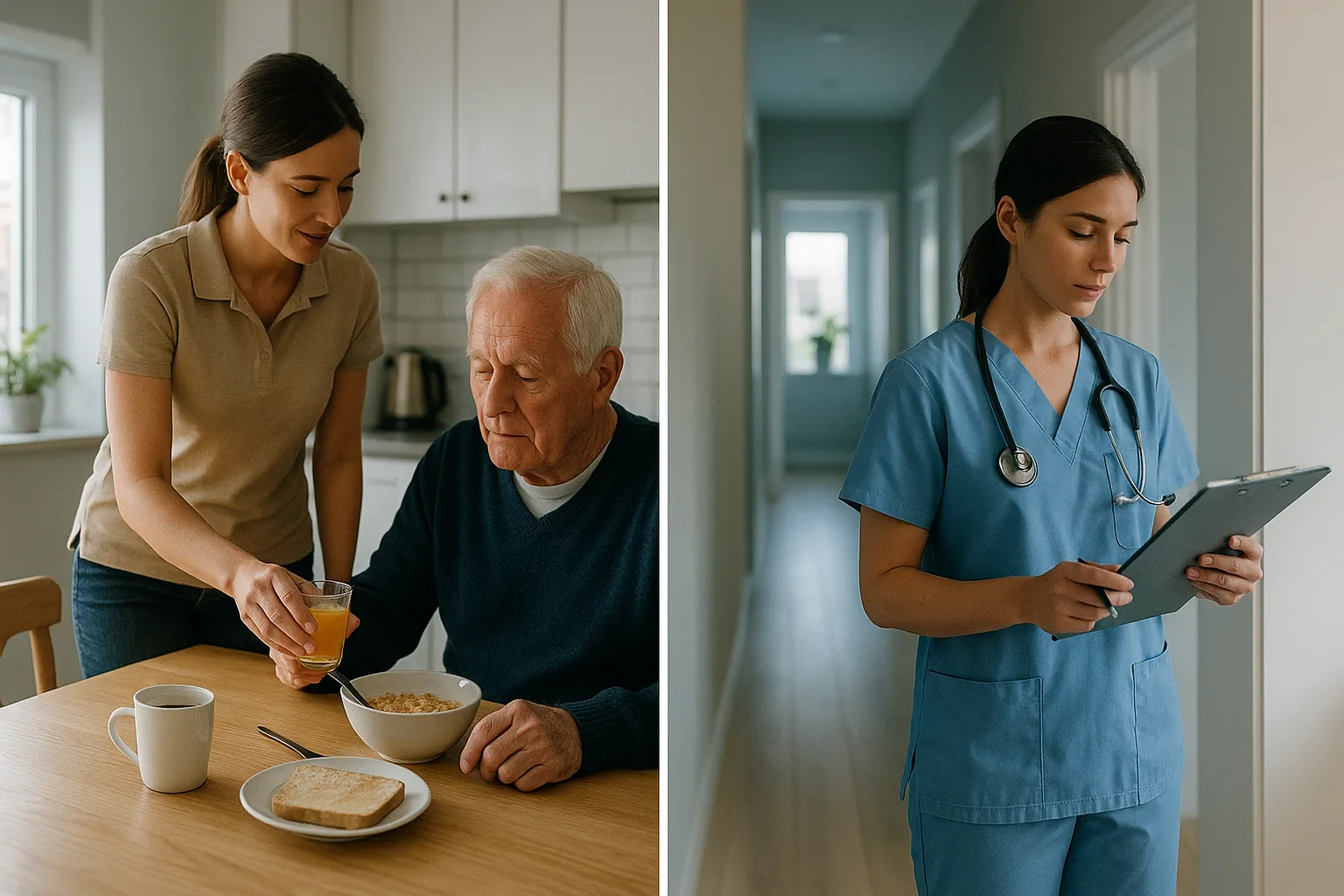
A caregiver — sometimes called a Home Health Care aide, companion, or personal care assistant — provides non-medical support that helps someone live safely and comfortably at home. Caregivers focus on the activities of daily living that most of us take for granted until they become hard: bathing, dressing, preparing meals, light housekeeping, running errands, and offering steady companionship.
Caregivers are trained in safety, mobility assistance, and how to support clients with dementia, mobility limitations, or recovery from surgery. They don’t administer injections, manage IV lines, or make clinical decisions. What they do offer is consistency — a familiar face who shows up, keeps the routine going, and notices when something seems off.
Families often turn to a caregiver when an older adult is still fairly independent but needs a hand with a few things, or when a family member who has been doing it all needs backup. You can read more about the full scope of compassionate, non-medical support on A Plus Care LA’s senior companionship and personal care page.
What Is a Nurse in a Home Setting?
A nurse brings clinical training into the home. In most cases, this means a Registered Nurse (RN) or Licensed Vocational Nurse (LVN), working under a physician’s plan of care. Nurses handle the medical side of recovery and chronic illness — the tasks that legally require a license and professional judgment.
Their work often includes:
- Administering medications, injections, and infusions
- Wound care, catheter care, and ostomy management
- Monitoring vital signs and disease progression
- Coordinating with doctors, pharmacists, and therapists
- Teaching patients and families how to manage a condition safely
Nurses are typically part of a broader team that can include physical, occupational, and speech therapists. If your loved one was recently discharged from the hospital or is managing a serious condition, the kind of skilled medical care delivered at home through a licensed agency is usually what’s being recommended.
When You Need a Caregiver
A caregiver is usually the right match when a loved one is medically stable but struggling with the rhythm of daily life. Some clear signs it’s time to bring one in:
- Meals are being skipped or the fridge stays empty
- Laundry, mail, and housekeeping are piling up
- Personal hygiene is slipping or becoming unsafe
- Loneliness, mild memory changes, or anxiety about being alone
- A family caregiver is burning out and needs respite
Caregivers are also a natural fit when someone is recovering from illness and simply needs a reliable hand while they regain their footing. Families in neighborhoods across the city often turn to dedicated in-home support on the Westside for exactly this kind of steady, day-to-day help.
If your situation is still uncertain, pay attention to the early warning signs that an aging parent needs help — small changes in the home often tell the real story before a crisis does.
When You Need a Nurse
A nurse becomes essential the moment care crosses into clinical territory. Consider skilled nursing when your loved one:
- Was recently discharged from the hospital or a rehab facility
- Has a wound, incision, or pressure ulcer that needs professional care
- Is managing a complex medication regimen or new diagnosis
- Needs IV therapy, injections, or tube feeding
- Has a condition like CHF, COPD, or diabetes that requires monitoring
Post-surgical patients often need a combination — clinical visits from a nurse plus rehabilitation services at home — to recover safely without repeated trips to a clinic. The occupational therapy in Brentwood that rebuilds daily function is what helps a patient go from needing help with a fork to making their own breakfast again.
When You Actually Need Both
Plenty of families discover the answer isn’t one or the other. A senior recovering from hip surgery might need a nurse two or three times a week for wound care and medication management, plus a caregiver every day to help with bathing, meals, and getting around safely. A client with early-stage Parkinson’s might need a caregiver full-time and a nurse monthly to monitor progression.
A good agency coordinates these roles so they reinforce each other instead of overlapping. That’s the advantage of working with a team that offers the full spectrum — clinical home support with a connected care plan means the caregiver and nurse are reading from the same page.
How to Choose the Right Support for Your Family
If you’re stuck between options, start with three practical questions:
- What specific tasks are going unmet right now? Write them down. If the list is full of medical tasks, you need a nurse. If it’s daily living, you need a caregiver.
- Has a doctor ordered home health? If yes, skilled nursing may be partially covered by insurance.
- What will the situation look like in three months? Planning ahead prevents scrambling after a fall or a hospitalization.
From there, a short phone consultation with a licensed agency can usually settle the question in ten minutes. A professional Home Health Care team serving the greater Los Angeles area can assess the home, review any physician orders, and build a plan that fits your budget and your loved one’s real needs.
Getting the Right Help Sooner, Not Later
The question isn’t really “caregiver or nurse” — it’s “what does my loved one actually need to stay safe and live well?” Sometimes that’s a warm companion who makes lunch and keeps the house moving. Sometimes it’s a nurse with a stethoscope and a wound kit. Often, it’s both, working together.
If you’re still weighing it, don’t wait for a fall or a hospital visit to force the decision. A short, honest conversation with a licensed Home Health Care and home health team can save you weeks of stress and point you to the exact level of support your family needs — nothing more, nothing less.