
Watching a parent or spouse struggle to find words they once used effortlessly is one of the most painful parts of supporting a loved one with memory loss. Dementia does not just affect memory—it reshapes the way a person thinks, expresses themselves, and connects with the people they love most. Understanding these changes can help families respond with patience, creativity, and compassion rather than fear or frustration.
Why Does Dementia Affect Communication?
Dementia is a broad term for conditions—Alzheimer’s disease being the most common—that progressively damage brain cells. The regions responsible for language, attention, and reasoning are often among the first affected, which is why communication difficulties appear early and become more pronounced over time.
It is important to remember that the person with dementia is not choosing to be confusing or difficult. They are experiencing a neurological condition that is beyond their control, and your ability to adapt your own communication style can make a profound difference in the quality of your relationship.
Early-Stage Communication Changes to Watch For
In the early stages of dementia, the signs can be subtle enough to be dismissed as normal aging. Families often look back and recognize these moments only after a diagnosis is made:
- Word-finding difficulties: Pausing mid-sentence, substituting a general word like "thing" for a specific one, or describing an object instead of naming it.
- Repetition: Asking the same question multiple times within minutes because the earlier conversation was not retained.
- Losing track of conversations: Struggling to follow along when multiple people are talking or when a discussion has several layers.
- Reduced initiation: Becoming quieter or less likely to start conversations, even with people they were once talkative around.
These early changes can be managed well at home with the right support. Many families find that engaging skilled in-home health services on provides vital clinical assessments and therapeutic exercises that help preserve functional cognitive abilities.
How Communication Shifts in the Middle Stages
As dementia progresses, communication challenges become more significant and can feel overwhelming for family members who are unprepared. During the moderate stages, you may notice:
- Increased confusion about time and place: Your loved one may not remember where they are, what year it is, or that a family member has passed away.
- Difficulty understanding longer sentences: Short, direct statements become far more effective than complex explanations.
- Emotional responses without clear cause: Crying, agitation, or withdrawal may reflect a need or feeling they cannot put into words.
- Mixing up names or relationships: Calling a spouse by a sibling’s name or confusing adult children with their parents is common and not a reflection of how much they love you.
- Non-verbal communication increases: Facial expressions, gestures, and touch become more central to connection as language becomes harder to access.
During this stage, many families explore rehabilitative therapy options delivered at home, including speech-language pathology, which can help individuals with dementia maintain functional communication longer.
Communication in the Later Stages of Dementia
In the advanced stages, verbal communication may become very limited or stop altogether. Words may come out as sounds, fragments, or repetitive phrases with no clear meaning. This stage is heartbreaking, but connection is still very much possible.
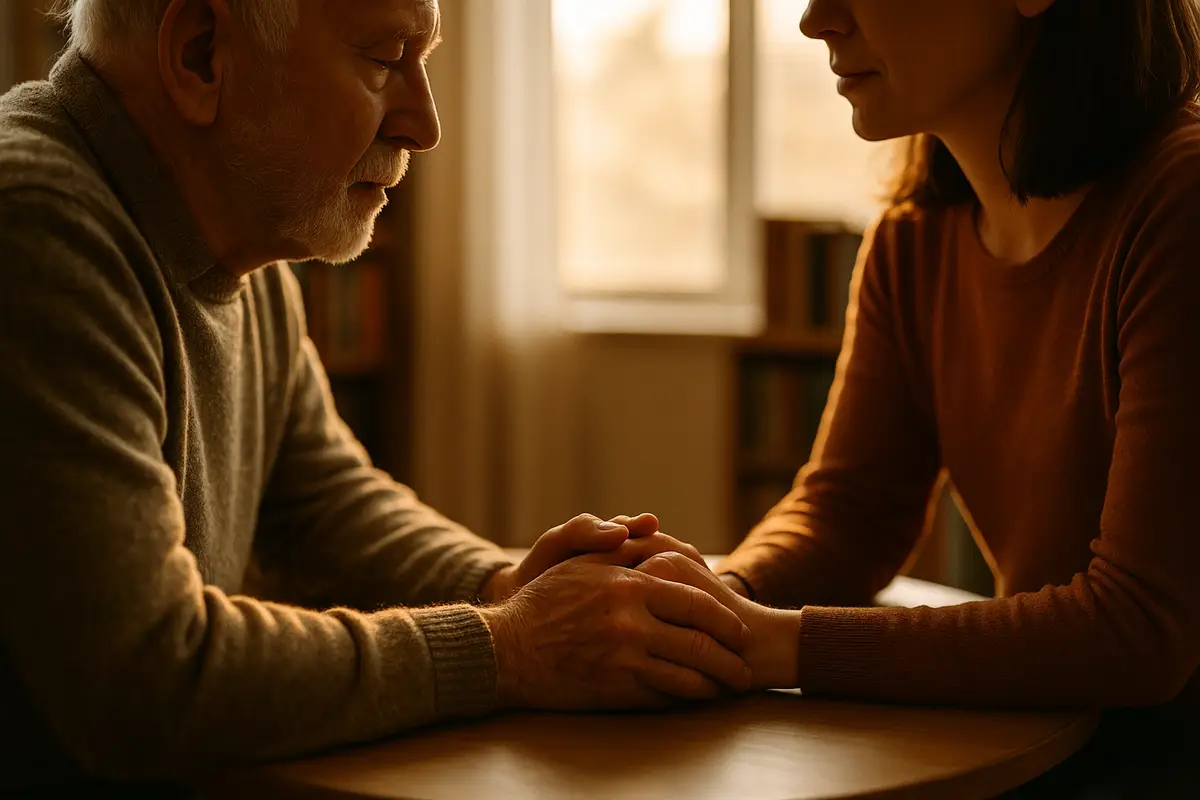
Holding a hand, making eye contact, using a gentle tone, humming a familiar song, or simply sitting quietly together—all of these remain meaningful forms of communication even when language is gone. Your presence matters more than your words.
How Professional Care Supports Communication and Daily Life
Caregivers often benefit from professional guidance in navigating the communication changes that come with dementia. Occupational therapists, in particular, are trained to assess how cognitive changes affect a person’s ability to perform daily activities—and to design strategies that support both function and quality of life.
Through personalized occupational therapy, individuals with dementia can receive targeted support for maintaining independence in daily routines, which reduces frustration and creates more opportunities for meaningful interaction with loved ones.
Families also gain practical tools—structured communication techniques, environmental modifications, and activity planning—that make caregiving more manageable and less isolating.
Caring for Yourself While Caring for Someone With Dementia
Caregiver burnout is real, and it affects your ability to be present and patient. If communication has become a source of daily stress, it may be time to seek additional support—whether through respite care, professional home health services, or community resources.
You do not have to manage this alone. For many families, bringing in a trained professional—even a few hours a week—restores the energy needed to stay connected and compassionate.
Serving Families Across Los Angeles
A Plus Care LA provides compassionate in-home health services and therapy to families throughout Los Angeles County, including Beverly Hills, Hollywood, and Westwood. If your loved one has been diagnosed with dementia and you are looking for professional support that comes to you, we are here to help.
Contact us today to speak with a member of our clinical team and learn how our medical home health services can support your family’s needs.