
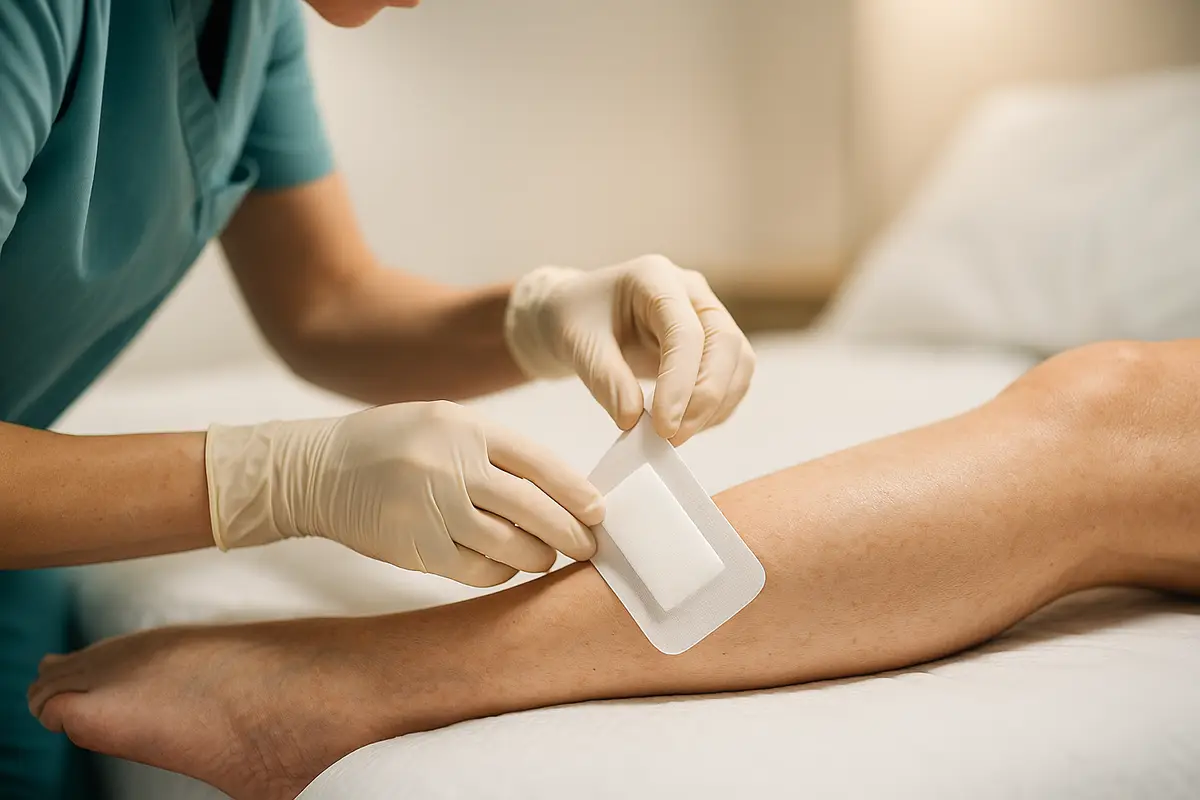
Diabetes mellitus is not merely a metabolic disorder of glucose regulation; it is a systemic vascular disease that severely compromises the body’s intrinsic healing mechanisms. One of the most critical and dangerous complications of advanced diabetes is the development of chronic, non-healing lower extremity ulcers. Because diabetes causes peripheral neuropathy (loss of sensation) and peripheral arterial disease (poor blood flow), a minor blister or scratch on a patient’s foot can rapidly progress into a deep, infected ulcer without the patient ever feeling pain.
For these individuals, a wound is a medical emergency.
If left unmanaged, diabetic ulcers frequently lead to osteomyelitis (bone infection), tissue necrosis, and ultimately, lower-limb amputation. Safely managing these volatile injuries requires a level of clinical precision that goes far beyond basic first aid or non-medical assistance. Utilizing professional diabetic wound care at home introduces a specialized medical team capable of treating the wound at the cellular level while preserving the patient’s overall physical stability.
Recognizing the Triggers for Professional Intervention
Families often struggle with recognizing when diabetic patients need professional home support. Because peripheral neuropathy numbs the lower limbs, a senior may walk on an open wound for weeks without reporting discomfort, leading to deep, hidden tissue damage.
To determine the exact progression of this silent risk, clinicians assess the pathology through a structured continuum:
| Stage of Pathological Process | Clinical Manifestation in Tissue | Level of Medical Threat |
|---|---|---|
| 1. Neuropathy | Loss of pain and thermal sensation in the lower extremities | Hidden Risk: Patient cannot physically feel tissue micro-trauma. |
| 2. Unnoticed Trauma | Friction blister, minor cut, or abrasion from footwear | Onset of Destruction: Skin integrity fails without patient awareness. |
| 3. Open Ulcer | Deep tissue defect extending through dermal layers | High Danger: Open portal established for opportunistic pathogens. |
| 4. Deep Infection | Development of cellulitis, tracking abscess, or osteomyelitis | Critical Threat: Rapid acceleration of ischemic necrosis and systemic sepsis. |
| 5. Amputation | Irreversible gangrene and bone necrosis | Catastrophic Outcome: Surgical limb loss required to preserve patient life. |
If a family member notices a foul odor, unexplained dark discoloration on the skin (necrosis), localized warmth, or fluid leaking through socks, they must bypass non-medical solutions immediately. Determining the root cause of these symptoms requires clinical diagnostic skills. Navigating this process and determining the right home health services for your needs ensures that the patient receives an authorized medical plan of care rather than generic custodial oversight.
Occupational Therapy: Offloading Strategies and Functional Adaptation
Reaching biological closure in a diabetic ulcer is impossible if physical pressure remains on the wounded tissue. Every step taken on an active foot ulcer forces blood out of the capillary bed, destroying newly formed granulation tissue and expanding the zone of necrosis.
This is where the science of offloading becomes essential.
While physical therapists analyze gait mechanics, incorporating specialized occupational therapy support for diabetic patients addresses how the patient interacts with their environment during healing. Occupational therapists do not provide personal hygiene care or do chores for the patient. Instead, they structurally modify the home and adapt activities so the patient can move without placing an ounce of weight on the affected limb.
Therapists teach advanced compensatory techniques, evaluate the fit of specialized diabetic orthotics or total contact casts, and implement energy conservation strategies. These targeted clinical interventions are crucial for managing outpatient therapy for diabetes-related mobility issues. By teaching patients how to navigate their living spaces safely using assistive devices, occupational therapists provide long-term home health services that help diabetic seniors stay independent without risking skin breakdown or mechanical re-injury.
Managing Complexity: The Interdisciplinary Solution
Diabetic wounds rarely exist in isolation. Most frequently, clinicians must build coordinated care strategies for seniors with multiple conditions, balancing diabetes alongside chronic kidney disease, severe peripheral edema, or cardiovascular failure. For instance, severe venous insufficiency causes fluid to pool in the lower limbs, increasing tissue tension and preventing a diabetic ulcer from closing. An isolated dressing change will fail if the edema is not medically controlled through compression therapy and precise systemic fluid management.
This reality highlights the absolute necessity of personalized care plans for diabetic wound treatment. Every dressing type, compression level, and physical therapy progression must be customized to the patient’s precise vascular and metabolic profile under direct physician supervision.
A diabetic wound is a serious medical challenge, but it can be managed successfully with the right clinical team. By combining advanced skilled nursing for infection control, precise offloading strategies from occupational therapists, and coordinated medical oversight, home health care provides the comprehensive clinical framework required to stimulate tissue healing, avoid catastrophic complications, and protect the patient’s long-term mobility within the safety of their home.
Managing a diabetic wound at home can feel overwhelming for families, but the right home health team in Brentwood, Westwood, Beverly Hills, and Beverly Grove provides both the clinical expertise and ongoing support needed to promote healing and reduce complications.
Frequently Asked Question
Why are wounds so dangerous for diabetic patients?
Diabetes damages both nerve function and blood circulation in the legs and feet. This means a patient may not feel a cut or blister forming, and the body struggles to heal it on its own. What starts as a small wound can quickly become a deep infection that, if left untreated, may lead to amputation.
What does a home health nurse do for diabetic wound care?
A skilled nurse monitors the wound closely at every visit — measuring its size, checking for signs of infection, analyzing drainage, and applying specialized dressings. They coordinate directly with the patient's doctor or podiatrist to adjust medications or treatment if the wound changes, keeping the entire care team informed.
Why is home wound care especially important right after a hospital discharge?
Leaving the hospital does not mean the wound is healed — it means the immediate crisis is stable. The first few days at home carry a high risk of infection if dressing changes are not done correctly. A home health nurse ensures proper sterile technique and catches any early warning signs of the wound worsening before it becomes a full emergency.
What warning signs should family members watch for in a diabetic loved one?
Look for foul odor coming from the foot or leg, dark or discolored skin patches, unexpected warmth in one area, swelling, or fluid soaking through socks. Because diabetic patients often cannot feel pain in their lower limbs, family members play a critical role in spotting these signs early.
How does occupational therapy support diabetic wound healing?
Occupational therapists focus on keeping pressure off the wound while the patient moves around at home. They modify the living space, teach safe movement techniques using assistive devices, and evaluate whether diabetic footwear or specialized casts fit properly — all to protect the wound from the mechanical pressure that prevents it from closing.
Can a diabetic wound be treated at home even if other health conditions are present?
Yes, but it requires a coordinated team approach. Many diabetic patients also deal with kidney disease, heart failure, or severe leg swelling — all of which affect how a wound heals. A skilled home health team builds a care plan that addresses all of these conditions together rather than treating the wound in isolation.
How do families know when it is time to bring in professional home health support for a diabetic wound?
If a diabetic family member has any open sore on their foot or leg — regardless of how minor it looks — professional evaluation is needed right away. Since nerve damage prevents pain from signaling danger, families should never wait for a wound to worsen before seeking skilled medical care at home.