
It’s 9:40 on a Tuesday morning in Mar Vista. Margaret, 72, is sitting at her kitchen table with a cup of tea when the doorbell rings. There’s no parking garage she had to navigate, no clipboard of forms balanced on her knee in a waiting room, no stranger calling her name across a crowded lobby. Just her physical therapist, on time, walking into the room where Margaret actually lives her life.
This is what mobile outpatient physical therapy looks like in practice — and it’s quietly reshaping how a lot of Angelenos recover, rebuild strength, and stay independent. Not in a clinic. At home, where the real challenges actually happen.
To understand why this model works so well, it helps to skip the brochure language and just follow an appointment from start to finish.
The First Visit: It Starts With Watching You Move
The clinic version of an evaluation tends to happen in an exam room with a padded table and a hallway for walking. Useful, but generic. A home evaluation starts somewhere far more honest: the actual floor plan of your life.
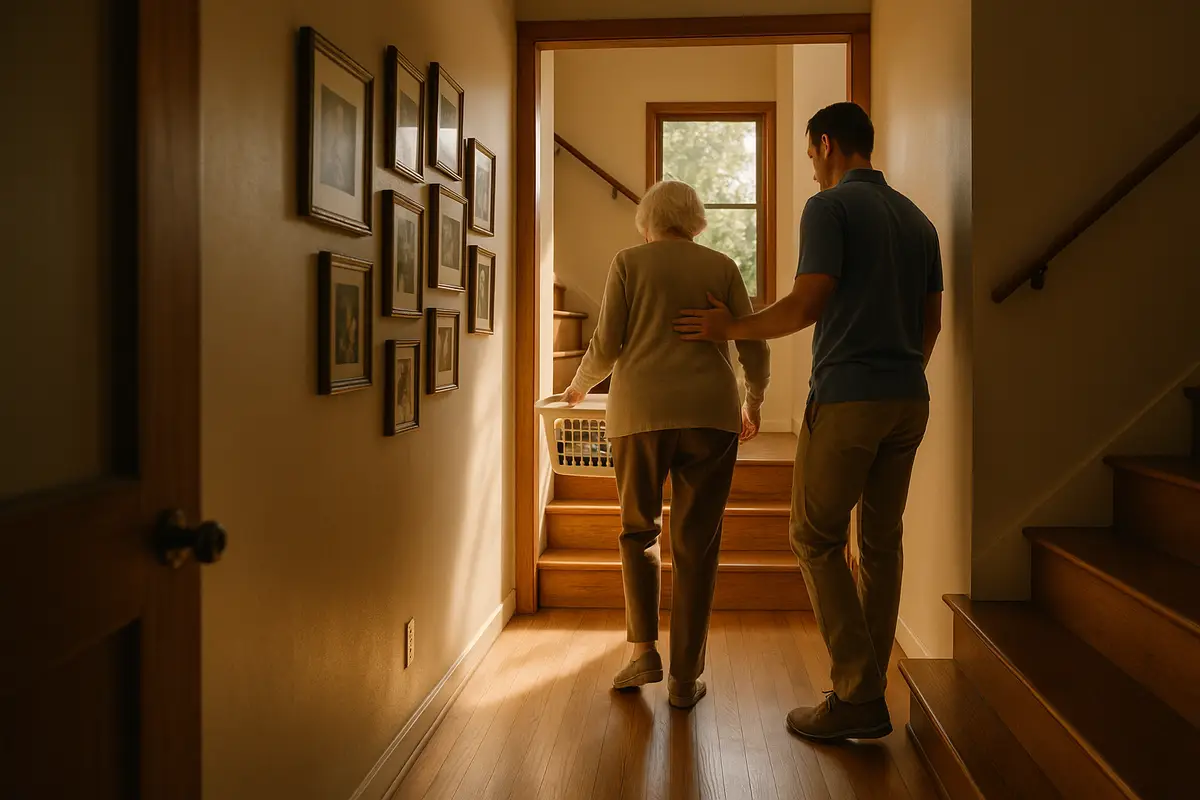
When the therapist sits down with Margaret, the conversation isn’t a rushed checklist. It’s a real discussion — what hurts, what she’s afraid of, what she misses being able to do. Margaret’s answer is specific. She wants to carry a laundry basket up the half-flight of stairs to her bedroom without gripping the rail and praying. That’s the goal. Not an abstract “improve lower-body strength” line on a form — a basket of laundry and a flight of stairs.
Then comes the part you can’t replicate in a clinic. The therapist watches Margaret stand up from her chair, walk down her hallway, and approach those stairs. Every measurement — strength, balance, range of motion, gait — gets taken in the exact environment where it has to hold up. The throw rug that’s a fall risk. The dim lighting on the landing. The bathroom threshold she clips with her toe. These don’t show up on a clinic intake form. At home, they’re impossible to miss.
That’s the quiet superpower of home-based care: the assessment and the real world are the same place.
Why the Setting Changes the Outcome, Not Just the Convenience
It’s tempting to file “therapy at home” under convenience — and yes, skipping LA traffic on the way to a Westside clinic is no small thing. But the deeper value isn’t logistical. It’s clinical.
Research and decades of rehab practice point to the same idea: skills learned in the environment where they’ll be used transfer better than skills learned somewhere else. A balance exercise mastered on a clinic’s level, rubberized floor doesn’t automatically translate to a sloped driveway in the Hollywood Hills or a hardwood hallway in Brentwood. Train where you live, and the gains stick.
There’s also the matter of attention. In a busy outpatient clinic, one therapist may float between several patients on several tables at once. At home, the entire session belongs to you. Every minute of that hour is one-on-one. For someone rebuilding after surgery or working through a stubborn balance problem, undivided expert attention isn’t a luxury — it’s the difference between guessing and progressing.
If you’re weighing your options after an operation, our breakdown of what to expect from post-surgery care at home in Los Angeles shows how this hands-on attention fits into a longer recovery arc.
Clinic vs. Home: An Honest Comparison
Mobile therapy isn’t automatically the right answer for everyone, and a trustworthy provider says so out loud. Here’s the fair version of the trade-offs.
A traditional clinic has heavy equipment — large machines, pools, specialized rigs — that simply can’t fit in a hatchback. For certain advanced strength and conditioning phases, that equipment matters. Clinics also suit people who are already mobile, drive easily, and prefer to keep rehab separate from home life.
Mobile outpatient therapy wins decisively for a different set of needs: when getting to a clinic is exhausting or impractical, when the goal is functional independence inside a specific home, when one-on-one attention accelerates results, and when waiting on a referral or a parking spot is a barrier to even starting. For the early-to-middle phases of most recoveries — and for ongoing strength, balance, and fall prevention — the home is often the better setting, not merely the easier one.
The honest takeaway: many patients do best with home-based therapy first, transitioning to a clinic only if and when they reach a phase that genuinely requires the big machines. A good therapist will tell you which camp you’re in.
Occupational Therapy: The Other Half of Independence
Margaret’s story is about movement, so it leans toward physical therapy. But plenty of homes need the companion discipline — occupational therapy — and the two are easy to confuse.
Where physical therapy rebuilds the engine (strength, balance, mobility), occupational therapy makes sure you can actually drive the car through a normal day. An occupational therapist looks at the tasks that fill your hours and removes the obstacles inside them. Buttoning a shirt after a stroke. Getting in and out of the shower safely. Reaching a top shelf without losing balance. Writing again. Pacing energy so the afternoon doesn’t collapse into exhaustion.
In Margaret’s case, an OT might recommend a better grab-bar placement, teach her a safer technique for that laundry basket, and reorganize her bedroom so the things she needs daily are within easy reach. It’s problem-solving aimed squarely at real life. You can explore the full scope on our occupational therapy in Los Angeles page, and see how PT, OT, and speech therapy fit together in our outpatient therapy at home program.
What Progress Actually Feels Like
By the third week, Margaret’s appointments have a rhythm. The therapist reviews what’s improved, adjusts the plan, and pushes the next challenge a notch further. The laundry-basket-on-the-stairs goal — once a source of genuine anxiety — has become a milestone she’s chasing on purpose.
This is how home therapy builds momentum. Because every session takes place in the same environment, progress is measured against the real benchmarks of her life, not against a clinic’s abstract scale. Standing from the couch gets easier. The dreaded landing feels less treacherous. Confidence returns, and with it, independence.
That confidence piece is worth naming. So much of what holds people back after an injury or surgery isn’t purely physical — it’s the fear of falling, of failing, of needing help. Practicing the exact movements that scare you, in the exact place they scare you, with an expert beside you, dismantles that fear in a way no clinic hallway can.
Getting Started Is Simpler Than Most People Expect
Here’s the part that surprises a lot of first-time patients: in California, you don’t necessarily need a doctor’s referral to begin outpatient physical therapy. The state allows direct access, meaning a licensed therapist can evaluate and treat you without waiting on referral paperwork. (Some insurance plans still ask for a referral to cover the visits, and there are limits in the law — so our team verifies your specific benefits before anything starts, no guesswork, no surprise bills.)
What that means for someone like Margaret is simple: she didn’t have to schedule a separate doctor’s appointment, lose a half-day, and wait on a fax just to get permission to feel better. She could start while the problem was still manageable — which is almost always when therapy works best.
A Provider You Can Actually Trust
Inviting a clinician into your home raises the bar on trust, as it should. A Plus Care is accredited by the Accreditation Commission for Health Care (ACHC), a national benchmark for quality and safety, and our mobile therapy is delivered by licensed, doctorate-level physical and occupational therapists serving Beverly Hills, Hollywood, Brentwood, Westwood, and the wider Los Angeles area.
Not sure whether home-based therapy fits your situation? We offer a free 15-minute phone consultation with a Doctor of Physical Therapy — a no-pressure way to get expert input before you decide anything.
Healing Where Life Happens
Margaret’s Tuesday morning didn’t look like medical care in the traditional sense. No waiting room, no fluorescent lights, no clipboard. Just expert hands at work in the place that matters most — her home, on her stairs, toward her goal.
That’s the quiet revolution of mobile outpatient therapy in Los Angeles. It meets you where your life actually happens, and it builds the kind of strength and confidence that follows you long after the last session ends.
We proudly bring this care to homes throughout Beverly Hills, Hollywood, Brentwood, Westwood, Beverly Grove, and Arlington Heights.
If you’re ready to find out what that could look like for you or someone you love, call 323-918-5505, email info@apluscarela.com, or book your free 15-minute consultation with a Doctor of Physical Therapy. Your stairs are waiting — let’s make them easy again.
Frequently Asked Questions
Do I need a doctor's referral to start physical therapy at home in Los Angeles?
No. California allows direct access, so a licensed physical therapist can evaluate and treat you without a referral. That said, some insurance plans still require one for coverage purposes, so it's worth confirming your specific benefits before your first visit.
How is a home physical therapy evaluation different from a clinic evaluation?
A home evaluation takes place in your actual living space, so the therapist can assess your strength, balance, and mobility against the real obstacles you face — stairs, thresholds, rugs, lighting — instead of a generic clinic setup. This makes the plan more accurate from day one.
Is home-based therapy as effective as going to a clinic?
For most of the recovery process, yes — often more so. Skills practiced in the environment where you'll actually use them tend to transfer better than skills learned on a clinic mat. Clinics still have an edge for advanced strength phases requiring heavy equipment, but early-to-middle recovery and fall-prevention work are well suited to home care.
What's the difference between physical therapy and occupational therapy?
Physical therapy focuses on rebuilding strength, balance, and mobility. Occupational therapy focuses on applying those gains to daily tasks — showering safely, getting dressed, reaching shelves, managing energy through the day. Many patients benefit from both working together.
How much one-on-one attention will I get during a home session?
The entire session is dedicated to you. Unlike a busy clinic where a therapist may be managing multiple patients at once, a home visit means undivided, one-on-one time for the full appointment.
Who is a good candidate for mobile outpatient therapy?
People who find it difficult or exhausting to travel to a clinic, anyone recovering after surgery, those working on fall prevention or balance, and patients who want therapy tailored to the specific layout and challenges of their own home.
Is A Plus Care accredited, and who provides the therapy?
Yes. A Plus Care is accredited by the Accreditation Commission for Health Care (ACHC), and all therapy is delivered by licensed, doctorate-level physical and occupational therapists serving Beverly Hills, Hollywood, Brentwood, Westwood, and the greater Los Angeles area.