A stroke is one of the most life-changing medical events an older adult can experience, often leaving physical, neurological, and emotional challenges that continue long after hospital discharge. In the acute phase, hospital clinicians focus entirely on stabilizing the patient’s vital signs and minimizing immediate brain tissue damage. However, true recovery does not conclude at discharge. The physical transition back to a domestic living space marks the beginning of a complex, long-term rehabilitation process that determines whether a senior will regain their functional autonomy or face permanent physical dependency.
Managing this critical stage requires a coordinated medical approach.
Rather than relying on non-medical companion services, sub-acute stroke survivors require specialized clinical monitoring to stimulate neuroplasticity and safely re-train muscle memory. Implementing comprehensive in-home health services for stroke survivors allows families to transform the home into a structured rehabilitation environment, ensuring that the patient receives advanced medical oversight and therapeutic interventions under direct physician guidance.
Advanced Physical Therapy: Restoring Core Stability and Gait Mechanics
Post-stroke mobility issues stem from a disruption in the brain’s motor cortex, resulting in hemiparesis (one-sided weakness) or severe spasticity. To reverse this muscle deconditioning, therapists must implement intensive physical rehabilitation that targets the central nervous system rather than just the isolated limbs.
Utilizing outpatient physical therapy for stroke-related motor recovery introduces specialized specialized rehabilitation techniques designed to rebuild damaged neural pathways. Licensed physical therapists utilize neurodevelopmental treatment (NDT) and proprioceptive neuromuscular facilitation (PNF) to guide the patient through controlled, repetitive exercises. These clinical protocols focus heavily on rebuilding strength and balance in stroke recovery, ensuring that the patient’s core muscle groups can stabilize the spine before complex walking exercises are attempted.
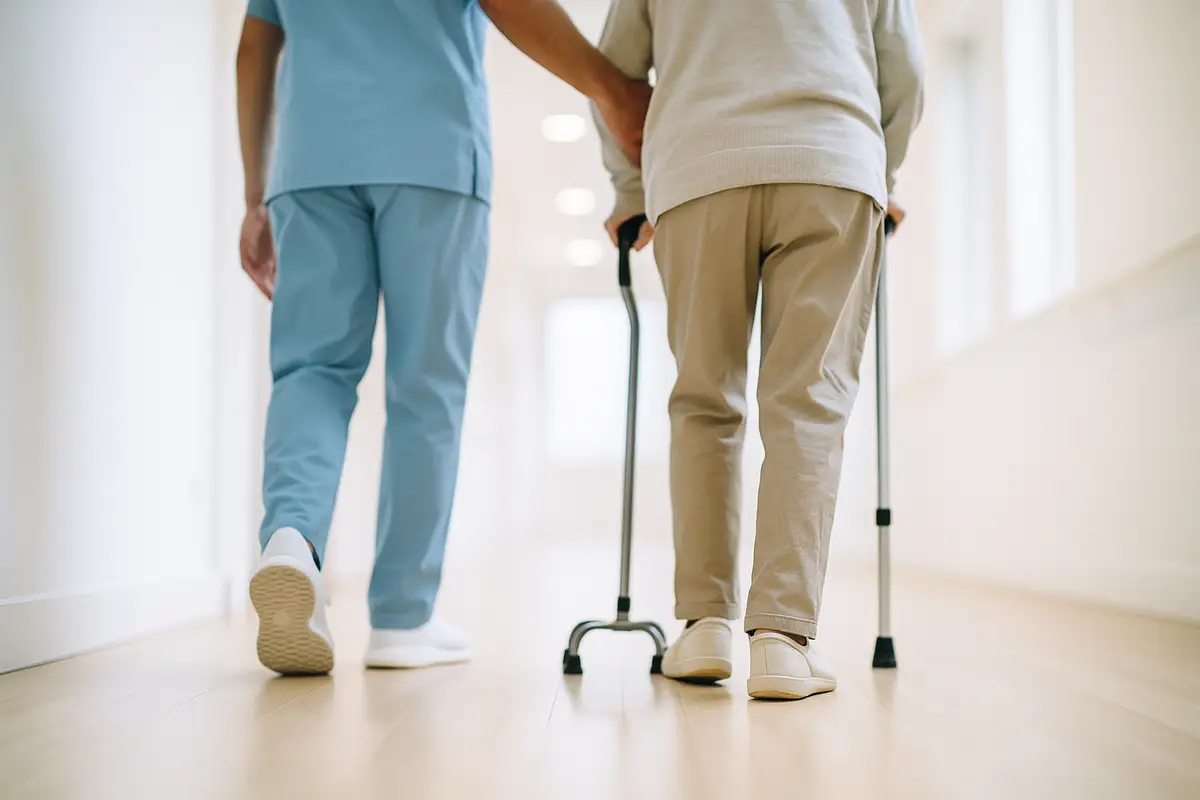
These targeted movements provide immense physical therapy benefits for elderly stroke survivors. By systematically training the affected leg, correcting gait abnormalities (such as foot drop), and implementing advanced balance training, physical therapists significantly reduce household fall risks. The objective is to restore safe, independent ambulation, allowing seniors to navigate stairs and household paths without experiencing dangerous oxygen drops or physical exhaustion.
Occupational Therapy: Neurorehabilitation and Functional Adaptation
While physical therapy establishes the foundational strength required for walking, occupational therapy addresses how the patient uses that physical strength to interact with their environment. A stroke often destroys fine motor skills, leaving a patient unable to coordinate simple hand movements or sequence the steps required for basic tasks.
Integrating targeted OT interventions for neurological conditions like stroke addresses these precise neurological gaps. Occupational therapists utilize task-splitting methods, breaking complex actions down into single, manageable physical steps. This approach helps the brain rebuild the motor planning sequences required for functional independence.
Patients focus on regaining independence through occupational therapy, learning to safely master their living spaces using advanced compensatory strategies. Clinicians evaluate the need for adaptive equipment, introduce cognitive exercises to counter memory deficits, and implement energy conservation routines. Receiving this specialized occupational therapy to restore daily functioning after stroke ensures that the patient learns to safely navigate their home. Seniors gain the distinct advantage of receiving hands-on occupational therapy without leaving home, keeping 100% of their physical stamina reserved for neurological recovery rather than losing energy to stressful transit.
The Necessity of Sustained Interdisciplinary Coordinated Care
A stroke is not a brief illness; it is a complex condition that alters a patient’s overall level of function for months or years. For this reason, short-term, uncoordinated therapies are insufficient for achieving permanent functional recovery. Successfully managing long-term stroke recovery with coordinated home health care in Brentwood, Westwood, Beverly Hills, and Beverly Grove requires continuous communication between physical therapists, occupational therapists, skilled home health nurses, and the patient’s attending neurologist.
This interdisciplinary collaboration ensures that all therapy plans remain coordinated. For instance, as the physical therapist advances the patient’s standing balance, the occupational therapist immediately integrates that new stability into upper-extremity reaching exercises, while the home health nurse monitors blood pressure tolerance to ensure the cardiovascular system safely supports the increased physical demand.
Reclaiming physical autonomy after a stroke is a challenging journey, but it can be accomplished successfully with a dedicated clinical team. By combining advanced physical therapy for gait mechanics, neurorehabilitative occupational therapy for fine motor control, and skilled nursing for cardiovascular stability, home health care provides the comprehensive medical framework necessary to support ongoing neurological recovery, prevent secondary hospitalizations, and restore a high quality of life within the comfortable, familiar environment of home.
Frequently Asked Question
Why does stroke recovery require professional support at home after leaving the hospital?
Leaving the hospital is just the beginning of recovery, not the end. The weeks following discharge are among the most vulnerable for a stroke survivor. Without proper medical oversight at home, patients risk falls, muscle deterioration, medication errors, and even a second stroke — all of which can be prevented with the right care team in place.
What warning signs should families watch for after a stroke survivor comes home?
Watch for increased facial drooping on one side, difficulty swallowing, sudden changes in blood pressure, persistent unsteadiness, or ignoring objects on one side of the body. These signs may indicate neurological decline or a risk of a second stroke and require immediate professional evaluation.
How soon should home health care begin after a stroke patient is discharged?
Ideally within 48 hours of leaving the hospital. The first few days at home are especially dangerous because the environment changes dramatically from the controlled hospital setting. Having a therapist or nurse assess the home and the patient's movement right away helps reduce the risk of falls and setbacks.
How does physical therapy help stroke survivors regain mobility?
Physical therapists use specialized movement techniques to retrain the brain's motor pathways rather than just exercising the affected limbs. They work on core stability, correcting walking patterns, addressing issues like foot drop, and building the balance needed to safely navigate stairs and move through the home independently.
What does occupational therapy focus on for stroke recovery?
Occupational therapy rebuilds fine motor skills and the ability to sequence daily tasks — things like buttoning a shirt, holding utensils, or managing personal hygiene. Therapists break complex actions into single manageable steps, helping the brain relearn how to plan and execute movements for everyday independence.
Why is coordinated care between multiple therapists important for stroke recovery?
A stroke affects multiple systems at once — mobility, fine motor control, cognition, and cardiovascular health. When physical therapists, occupational therapists, and nurses work together and communicate regularly, each discipline builds on the other's progress. This synchronized approach leads to faster, more complete recovery than isolated therapy sessions alone.
Can stroke recovery continue to improve months after the initial event?
Yes. The brain continues to adapt and form new connections well beyond the early weeks of recovery. Sustained therapy prevents plateaus, maintains the gains already made, and continues to improve strength, coordination, and daily function over time. Long-term engagement with a home health team is key to achieving lasting independence.