
A typical physical therapy session lasts 30 to 60 minutes. Your first visit, called the initial evaluation, often takes closer to 60 minutes because your therapist reviews your history, tests how you move, and builds a treatment plan. Follow-up visits usually run 30 to 45 minutes, and in-home sessions commonly last 45 to 60 minutes with no travel time added to your day.
Physical Therapy Session Length at a Glance
| Visit Type | Typical Length | What Happens |
|---|---|---|
| Initial evaluation | 45 to 60 minutes | History review, movement testing, goal setting |
| Standard follow-up | 30 to 45 minutes | Exercises, manual therapy, progress check |
| Extended or complex visit | Up to 60 minutes | Neurological, post-surgical, or balance work |
| Re-assessment | 30 to 60 minutes | Measures progress and updates the plan |
| In-home session | 45 to 60 minutes | One-on-one treatment in your own living space |
Key points to remember:
- Most sessions fall between 30 and 60 minutes.
- The first visit is usually the longest.
- Complex conditions, such as stroke recovery or joint replacement, often call for longer visits.
- Session length is only part of the picture. How often you attend matters just as much.
What Is a Physical Therapy Session?
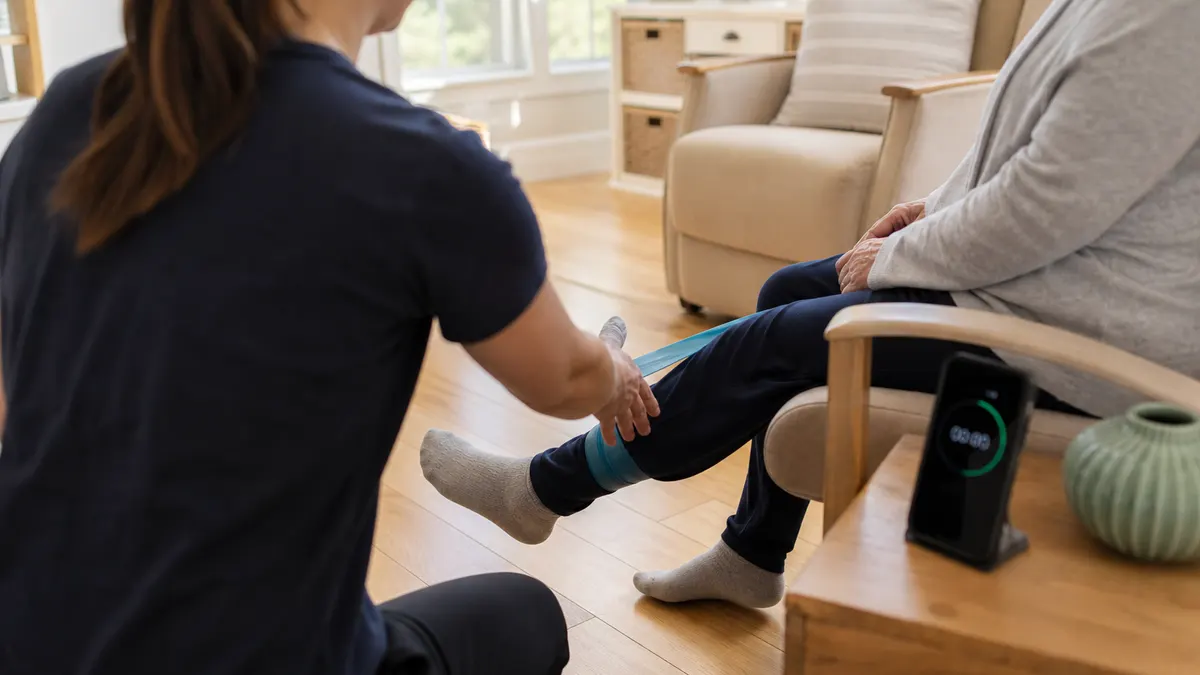
A physical therapy session is a one-on-one appointment in which a licensed therapist evaluates how you move, treats the physical limits holding you back, and teaches you how to keep improving at home. It is far more than a set of exercises. A good session blends hands-on care, guided movement, and coaching, all aimed at a specific goal such as walking without pain, climbing stairs safely, or returning to a favorite activity.
Sessions can take place in a clinic, a hospital outpatient department, or your own home. Patients across Los Angeles can receive skilled, doctor-ordered physical therapy at home or, when they are able to travel, through licensed outpatient physical therapists in a clinic setting. The setting changes the logistics, but the clinical purpose of each visit stays the same.
Why Your First Visit Takes Longer
The initial evaluation is the foundation of your care, which is why it tends to be the longest appointment. Your therapist reviews your medical history, medications, past injuries, and goals. Next, they measure strength, flexibility, balance, and walking pattern, and often begin light treatment before the visit ends. By the time you leave, you should know what is driving your problem, what the plan looks like, and what progress to expect over the coming weeks.
Because so much happens at once, preparation pays off. Patients who know how a first in-home physical therapy appointment unfolds tend to be better prepared, with thoughtful questions, a clear medication list, and realistic goals. Writing down a few questions to ask your physical therapist beforehand is an easy way to use that time well.
Factors That Change How Long a Session Lasts
Two people with the same diagnosis can have very different appointment lengths. These factors usually decide the schedule:
- Your diagnosis: A mild ankle sprain may need less time than rehabilitation after a stroke or spinal surgery.
- Your stamina: Older adults and people recovering from surgery may do shorter bursts of work with more rest breaks.
- Your goals: Building strength, improving balance, and retraining walking each demand different amounts of practice.
- Your stage of recovery: Early visits often focus on pain control and gentle movement, while later visits grow more demanding.
- Insurance and scheduling: Authorized visit lengths and therapist availability can shape the time slot you receive.
Session length also connects to the length of your overall care. Many patients ask about the number of sessions most patients need, and the honest answer depends on the same factors above. Shorter visits spread over more weeks can work very well when the plan is thoughtfully designed.
In-Home Sessions vs. Clinic Sessions
Time on the treatment table is only one part of the time you spend. A 45-minute clinic visit can easily become a two-hour commitment once travel, parking, and waiting are added. With in-home physical therapy, the therapist arrives at your door and the whole appointment goes to treatment.
| Factor | Clinic Visit | In-Home Visit |
|---|---|---|
| Travel and parking | Often 30 minutes or more round trip | None |
| Waiting room time | Possible | None |
| Attention | May be shared with other patients | One-on-one for the full session |
| Practice environment | Clinic gym | Your own stairs, furniture, and floors |
Practicing in the space where you actually live also makes exercises more relevant. A closer look at how home visits compare with clinic appointments in Los Angeles can help you decide which format fits your schedule and recovery needs.
How Insurance Can Affect Session Time
Insurance can influence how time is structured. Medicare and many private plans bill outpatient therapy in timed units, typically 15 minutes each, so your therapist documents the minutes spent on specific treatments. That is one reason visits often run in blocks of 30, 45, or 60 minutes. A physician referral or documentation of medical necessity is generally required for coverage.
Rules differ by plan and setting, so it is wise to review Medicare coverage for physical therapy at home before your first visit. Some plans cap the number of visits or require approval for additional care, and knowing that early prevents surprises later.
How to Get the Most Out of Every Session
Whether your appointment lasts 30 minutes or 60, a little preparation makes the time count:
- Arrive a few minutes early, or clear a safe space ahead of an in-home visit.
- Wear loose, comfortable clothing and supportive shoes. A quick checklist on what to wear to physical therapy can remove the guesswork.
- Describe your pain specifically: where it hurts, when it flares, and what makes it better or worse.
- Bring a list of medications, your insurance details, and any referral paperwork.
- Practice your home program, since physical therapy exercises you can do between sessions extend the benefit of every visit.
- Speak up if you feel unusually tired or if something hurts more than expected.
Showing up regularly matters as much as the length of any single visit. In fact, staying consistent with outpatient therapy often makes the difference between slow progress and steady gains.
When to Talk to Your Therapist About Session Length
If your sessions feel too short to cover your goals, or so long that you leave exhausted, tell your therapist. Plans can be adjusted. A good session should challenge you without causing sharp pain or lasting fatigue. Sudden worsening pain, dizziness, or chest discomfort during or after therapy needs prompt medical attention.
Make Every Minute Count
A physical therapy session may last only 30 to 60 minutes, but those minutes shape how you move and feel between visits. Knowing what each part of the appointment is for makes it easier to take part fully and ask good questions. If you would like to talk through your options, A Plus Care offers free 15-minute phone consultations with a Doctor of Physical Therapy and brings licensed therapy to patients at home across Los Angeles.
Therapy services are available for patients in Beverly Hills, Brentwood, Mid-City, Westwood, Arlington Heights, and Sawtelle.
Frequently Asked Questions
How long is a typical physical therapy session?
Most physical therapy sessions last 30 to 60 minutes. Follow-up visits tend to be 30 to 45 minutes, while evaluations and complex cases may take up to an hour.
How long is the first physical therapy appointment?
The first appointment usually lasts 45 to 60 minutes. That time covers your medical history, movement testing, goal setting, and often a first round of treatment.
Is 30 minutes enough for physical therapy?
For many conditions, yes. Thirty focused minutes can be effective for mild injuries or later-stage visits, while recovery from surgery or a stroke often benefits from longer sessions.
How many times a week will I need physical therapy?
Many patients attend one to three times per week. Your therapist sets the frequency based on your diagnosis, stamina, and goals, then adjusts it as you improve.
How long do in-home physical therapy sessions last?
In-home sessions commonly last 45 to 60 minutes. Because there is no travel or waiting, nearly all of that time goes toward hands-on care and exercise.
Why do some sessions feel shorter than the scheduled time?
Part of every appointment goes to check-in, rest breaks, education, and wrap-up. The hands-on portion may be shorter than the full slot, but each piece serves your plan.
Do longer physical therapy sessions lead to faster recovery?
Not necessarily. Quality, consistency, and a well-designed plan matter more than minutes alone, and overly long sessions can cause fatigue that slows progress.
What should I bring to my first physical therapy session?
Bring comfortable clothing, supportive shoes, a medication list, your insurance information, any physician referral, and a short list of your goals and questions.