
Getting physical therapy at home starts with a doctor’s referral or a direct-access evaluation, followed by an insurance check, choosing a licensed home health agency, and completing an in-home assessment that becomes your personalized treatment plan. Most patients can begin sessions within a few days of approval, often with Medicare or private insurance covering the cost when medical necessity is documented.
For older adults recovering from surgery, managing a chronic condition, or simply finding it hard to travel to a clinic, in-home physical therapy removes the biggest barrier to consistent recovery: getting there. This guide walks through exactly how the process works, what to expect at each stage, and how to make the most of care delivered right in your living room.
What Is In-Home Physical Therapy?
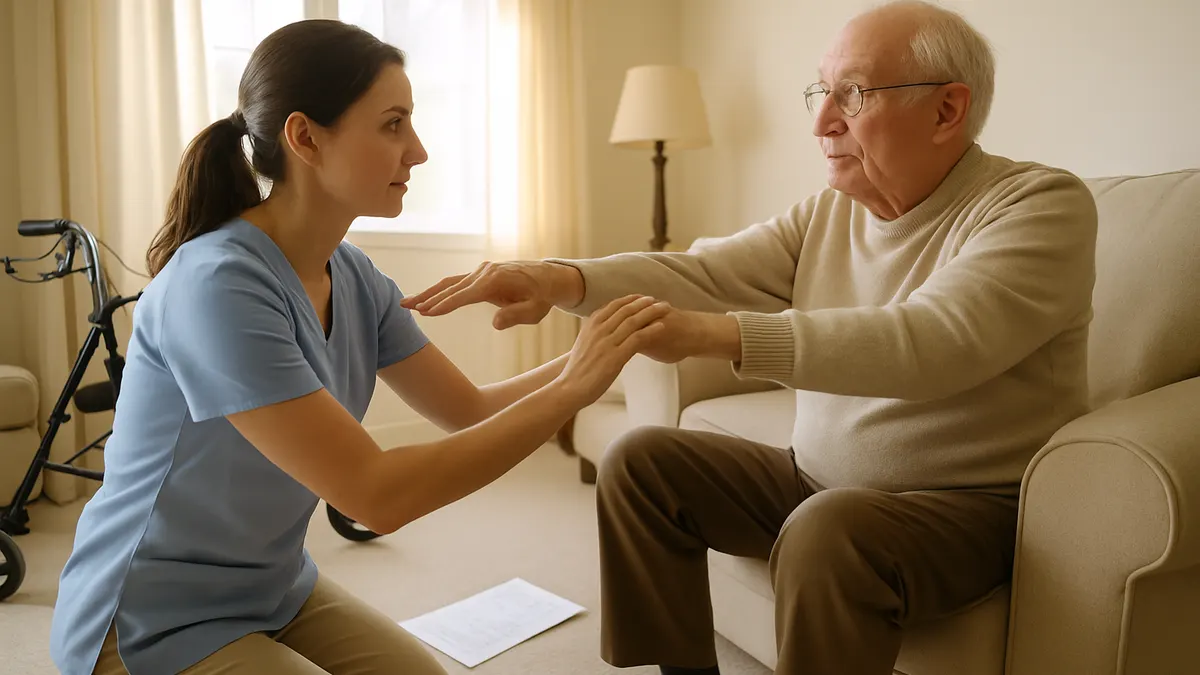
In-home physical therapy is a licensed clinical service in which a physical therapist travels to a patient’s residence to deliver evaluation, treatment, and progress monitoring instead of requiring the patient to visit an outpatient clinic. It typically includes strength and balance training, gait retraining, pain management techniques, and functional exercises tailored to the patient’s actual living environment — the stairs they climb, the shower they use, the furniture they navigate every day.
This model is especially valuable for people recovering from joint replacement, stroke, a hospital stay, or a fall, as well as those managing arthritis, Parkinson’s disease, or general mobility decline related to aging. Therapy that happens in the home also tends to translate more directly into daily function, since exercises are practiced in the exact setting where they matter most.
Who Benefits Most From At-Home Physical Therapy?
At-home physical therapy tends to work best for:
- Post-surgical patients recovering from hip, knee, or spine procedures who need supervised movement without a difficult car ride
- Older adults with mobility limitations who are at higher fall risk during transportation to and from appointments
- Stroke and neurological patients who need consistent, closely supervised sessions to rebuild strength and coordination
- Homebound individuals, as defined by Medicare, who cannot leave home without considerable effort or assistance
- Families and unpaid home caregivers who need a therapist to also assess the home environment for safety modifications
What to Expect During Your First Visit
Many patients feel some uncertainty before your first in-home physical therapy session, but the format is straightforward. The therapist arrives with basic equipment, reviews your medical history, performs a hands-on assessment of strength, range of motion, and balance, and explains what the coming weeks will look like. Sessions typically run 45 minutes to an hour, and most patients find the environment more relaxed than a busy outpatient clinic.
In-Home vs. Outpatient Clinic Therapy: A Quick Comparison
| Factor | In-Home Physical Therapy | Outpatient Clinic Therapy |
|---|---|---|
| Travel required | None | Required, often difficult post-surgery |
| Environment | Patient’s actual living space | Controlled clinic setting |
| Equipment | Portable, functional tools | Full gym-style equipment |
| Fall risk during transport | Eliminated | Present for mobility-limited patients |
| Caregiver involvement | Direct, in real time | Limited to appointment windows |
| Best suited for | Homebound, post-surgical, high fall-risk patients | Patients who are mobile and can travel safely |
Recovering from a hip or knee procedure often raises the same question of timing, and many patients ask about starting physical therapy soon after surgery — in most cases, early mobilization within days of discharge leads to better long-term outcomes than waiting.
Tips for Getting the Most Out of Home-Based Physical Therapy
- Keep a consistent, clutter-free space available for each session
- Complete home exercise assignments between visits — consistency matters more than intensity
- Communicate pain or discomfort immediately rather than pushing through it
- Involve family members or caregivers so they understand how to assist safely
- Ask your therapist to explain the reasoning behind each exercise, not just the movement itself
- Keep a simple log of pain levels, mobility milestones, and questions for your next session
Families exploring this option often also look into in-home occupational therapy for daily living skills or vestibular rehab for balance and dizziness issues, both of which frequently complement a physical therapy plan for older adults recovering at home.
Getting Started With In-Home Physical Therapy
Getting physical therapy at home doesn’t have to feel complicated once you understand the sequence: confirm a referral or direct-access eligibility, check your coverage, choose an accredited agency, complete your evaluation, and follow a plan built around your actual daily life. Residents of the Palms neighborhood have access to in-home physical therapy and home health services built around the local community, with therapists who design recovery plans around each patient’s real home environment rather than a generic clinic routine.
Wherever you’re recovering across Los Angeles, the right home health partner can make the difference between a stalled recovery and steady, measurable progress. A Plus Care brings licensed, Medicare-certified in-home physical therapy directly to patients across the region, building each plan around the home environment, schedule, and goals that matter to the individual receiving care.
Service areas: Beverly Hills, Brentwood, Downtown LA, Hollywood, Palms, Sawtelle, West Hollywood, Westwood, Arlington Heights, and Beverly Grove.
Frequently Asked Questions
Does Medicare cover physical therapy at home?
Medicare Part A or Part B can cover in-home physical therapy when a physician certifies medical necessity and the patient meets Medicare's homebound requirements. Coverage details, visit limits, and copays vary, so it's worth confirming specifics with your agency before starting care.
How do I qualify for home health physical therapy?
Qualification generally requires a physician's order or a direct-access evaluation, a documented medical need for skilled therapy, and, for Medicare coverage specifically, meeting the homebound definition. A licensed home health agency can walk you through the exact requirements for your situation.
How soon after surgery can physical therapy start at home?
Many patients begin within a few days of hospital discharge, since early, supervised movement generally supports faster and safer recovery than prolonged rest. Your surgeon and therapist will coordinate timing based on your procedure and overall health.
How many physical therapy sessions will I need?
Session counts vary by diagnosis, age, and starting mobility, but many home health plans begin with two to three visits per week for several weeks, followed by reassessment and gradual tapering as strength and function improve.
What's the difference between home health physical therapy and outpatient therapy?
Home health physical therapy is delivered in the patient's residence and is often used for homebound or post-surgical patients, while outpatient therapy requires travel to a clinic and typically suits patients who are more mobile and can transport themselves safely.
Is in-home physical therapy as effective as clinic-based therapy?
Yes, for appropriate candidates. Research and clinical experience consistently show that in-home therapy can match or exceed clinic-based outcomes for homebound and post-surgical patients, largely because exercises are practiced in the patient's real environment.
What should I prepare before my first in-home physical therapy visit?
Have your medical records, a list of current medications, a summary of your surgery or diagnosis, and a clear space available for the evaluation. It also helps to write down questions or specific daily activities you want to regain.
Can a caregiver be present during physical therapy sessions?
Yes, and it's generally encouraged. Having a caregiver present helps them learn safe transfer techniques, understand exercise progressions, and provide support between scheduled visits.