
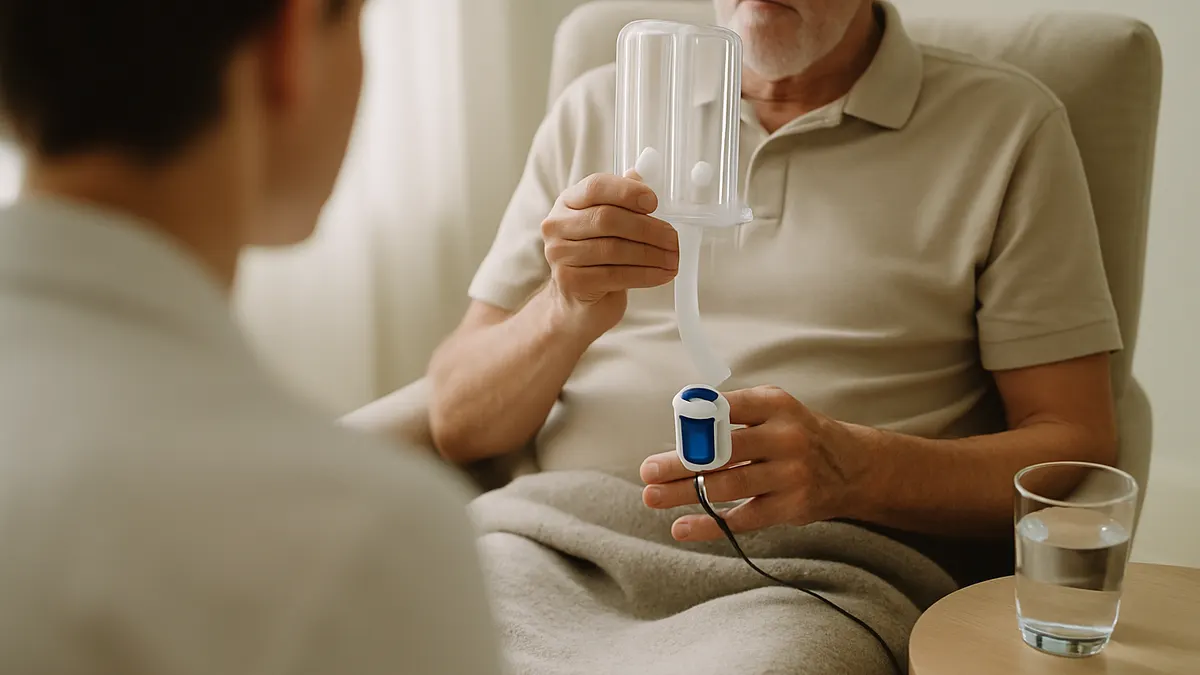
Physical therapy helps seniors recover from pneumonia at home by rebuilding lung capacity, restoring the strength lost during bed rest, and retraining balance so everyday movement feels safe again. A licensed therapist typically begins with gentle breathing exercises and light activity within days of hospital discharge, then gradually increases intensity as endurance returns. For most older adults, a structured home program shortens overall recovery time, reduces lingering fatigue, and lowers the chance of being readmitted to the hospital for a related complication.
What Happens to an Older Adult's Body After Pneumonia
Pneumonia is an infection that inflames the air sacs in one or both lungs, and for seniors the aftermath often lingers well past the point the infection itself clears. Days or weeks of bed rest and shallow breathing during the illness cause muscles to weaken quickly, a process clinicians call deconditioning. Oxygen levels can stay lower than normal for some time; the diaphragm and chest wall muscles lose some of their usual strength and coordination; and balance often suffers simply from spending so much time lying down instead of moving.
It is not unusual for a senior to be discharged from the hospital technically pneumonia-free, yet still unable to walk to the mailbox, climb a short flight of stairs, or stand at the kitchen counter for more than a few minutes without becoming winded. Family members are sometimes surprised by this gap between “the infection is gone” and “life feels normal again,” and that gap is precisely where a structured recovery plan makes the biggest difference.
Why Seniors Take Longer to Bounce Back
Age-related changes make this recovery slower and more complicated than it would be for a younger, healthier adult. Muscle mass naturally declines with age, so even a relatively short hospital stay can erase strength that took years to build, a pattern researchers sometimes call sarcopenia. Chronic conditions such as heart disease, diabetes, or COPD often complicate the breathing recovery process further, since the lungs are working against an already-reduced baseline capacity. Many seniors are also adjusting to new medications introduced during hospitalization, which can affect balance, appetite, or energy levels in ways that are easy to mistake for lingering illness.
Family caregivers frequently notice that a parent or spouse who was fully independent before pneumonia now needs help with tasks that once felt automatic, from getting dressed to preparing a simple meal. This shift is one reason regaining confidence in everyday activities becomes such a central part of recovery, rather than an afterthought once “the medical part” is finished.
What a Home-Based Recovery Program Typically Looks Like
Most home therapy programs follow a similar arc, though the exact pace and duration vary by patient, overall health, and how severe the pneumonia was:
- Initial evaluation — the therapist reviews hospital records, current medications, and the layout of the home, then measures baseline strength, oxygen levels, and mobility to set a starting point.
- Early sessions, roughly week one to two — focus on breathing exercises, short supervised walks, and safe transfers between bed, chair, and bathroom.
- Progressive strengthening, roughly week two to four — light resistance work, longer walking distances, and balance drills are added as endurance steadily improves.
- Functional training, roughly week four to six — practice with real daily tasks such as climbing stairs, carrying light items, or getting in and out of a car safely.
- Discharge planning — the therapist puts together a home exercise routine to continue independently and flags any warning signs of pneumonia complications the family should keep watching for after formal sessions end.
Signs a Senior May Need Physical Therapy After Pneumonia
Not every case requires the same level of support, but these signs typically point to a clear need for structured therapy rather than rest alone:
- Shortness of breath with only minimal activity, such as walking across a room
- Noticeable weakness or fatigue that limits basic daily tasks
- Difficulty getting up from a chair or in and out of bed without assistance
- A recent fall or near-fall since returning home from the hospital
- Reduced appetite or a clear drop in interest in moving around the house
When several of these signs appear together, involving a licensed team coordinating nursing and therapy under one care plan can help catch complications early and keep small setbacks from turning into another hospital admission.
A Realistic Recovery Timeline
| Timeframe | What to Expect |
|---|---|
| Week 1 | Fatigue is significant; short walks and breathing exercises begin under close supervision |
| Weeks 2-3 | Walking distance gradually increases; oxygen levels typically start to stabilize |
| Weeks 4-6 | Strength and balance noticeably improve; most daily tasks become manageable again |
| 2-3 months | Many seniors return to their pre-illness activity level, though some need longer |
Recovery speed varies with age, overall health, and how severe the pneumonia was, so this table reflects a typical pattern rather than a guarantee for any one patient.
Tips for Family Caregivers
- Keep a simple daily log of oxygen levels, appetite, and activity tolerance to share with the therapist at each visit
- Encourage, but don’t force, the exercises assigned for practice between sessions
- Watch for signs of overexertion during activity, such as excessive shortness of breath, dizziness, or unusual fatigue
- Make sure follow-up medical appointments stay on the calendar even as symptoms visibly improve
- Ask the therapist directly what a realistic next milestone looks like, so progress feels measurable instead of uncertain
Support a Safe Pneumonia Recovery at Home
Recovering from pneumonia at home is rarely a straight line, but a structured plan makes the path far more manageable for the senior and for the family supporting them. A Plus Care LA works with patients throughout West Hollywood, Arlington Heights, Beverly Hills, Beverly Grove, Los Angeles, Westwood, and Brentwood, and families interested in the full range of in-home recovery services available across Los Angeles can reach out to build a plan suited to their specific situation.
Frequently Asked Questions
How soon after a hospital stay can physical therapy start?
Many seniors can begin gentle sessions within a few days of returning home, once a physician confirms they are medically stable. Early, low-intensity movement is generally safer for recovery than prolonged bed rest.
Will physical therapy still help if oxygen levels are low?
Yes. Therapists coordinate with the supervising physician and adjust session intensity around oxygen saturation, often working alongside supplemental oxygen rather than waiting for levels to fully normalize first.
How many sessions are typically needed?
This varies widely by patient, but many home programs run two to three sessions per week for four to six weeks, with frequency tapering as strength and endurance return.
Is home physical therapy covered by insurance or Medicare?
Medicare and many private insurance plans cover home-based physical therapy when it is ordered by a physician and considered medically necessary, though exact coverage details vary by plan.
What is the difference between physical therapy and occupational therapy after pneumonia?
Physical therapy focuses on strength, breathing, and mobility, while occupational therapy focuses on the skills needed for daily tasks like dressing and bathing. Many seniors benefit from a combination of both during recovery.
Can physical therapy help prevent a repeat case of pneumonia?
While therapy cannot prevent infection directly, stronger breathing muscles, better lung expansion, and improved mobility all reduce the complications — like prolonged bed rest and poor airway clearance — that make repeat respiratory illness more likely.