Recovering from a stroke does not stop when a patient leaves the hospital or finishes a course of clinic-based therapy. Stroke rehabilitation exercises done consistently at home — including range-of-motion stretches, balance drills, grip-strengthening tasks, and simple walking routines — help rebuild strength, coordination, and independence over weeks and months. The key to progress is starting with clinician-approved movements, practicing them daily in short sessions, and adjusting the plan as function returns.
Quick summary of what this guide covers:
- What stroke rehabilitation is and why the home environment matters for recovery
- Safety steps to take before starting any home exercise program
- Arm, hand, leg, and balance exercises organized by recovery stage
- A simple weekly practice schedule
- Signs that a survivor needs additional professional support
- Answers to the most common questions families ask about stroke recovery at home
What Is Stroke Rehabilitation?
Stroke rehabilitation is the structured process of retraining the brain and body after a stroke damages areas responsible for movement, speech, balance, or cognition. Because the brain retains a degree of plasticity — the ability to form new neural connections — repeated, purposeful movement can help healthy areas of the brain take over functions once handled by damaged tissue. This is why frequency and repetition matter more than intensity in the early months of recovery.
A well-rounded rehabilitation plan typically blends three disciplines. Physical therapy focuses on walking, balance, and large muscle strength. Occupational therapy rebuilds the fine motor skills and daily living tasks needed for independence, such as safe dressing techniques, meal preparation, and handwriting. Speech-language therapy targets communication and swallowing difficulties that many survivors experience after a stroke. Families working with a home health team can coordinate all three so that home exercises reinforce, rather than conflict with, professional sessions.
Choosing in-home care that supports daily independence often makes this coordination easier, since therapists and nurses can observe the survivor’s actual living space and adjust exercises to match real daily challenges rather than a generic clinic setting.
Before You Begin: Safety Guidelines
Home exercise only helps when it is done safely. A fall or overexertion during recovery can set progress back by weeks. Keep these guidelines in mind before starting any routine:
- Get clearance from a physician or therapist before increasing exercise intensity or trying a new movement
- Clear walkways of rugs, cords, and clutter that could cause a trip
- Keep a sturdy chair, wall, or grab bar nearby during standing exercises
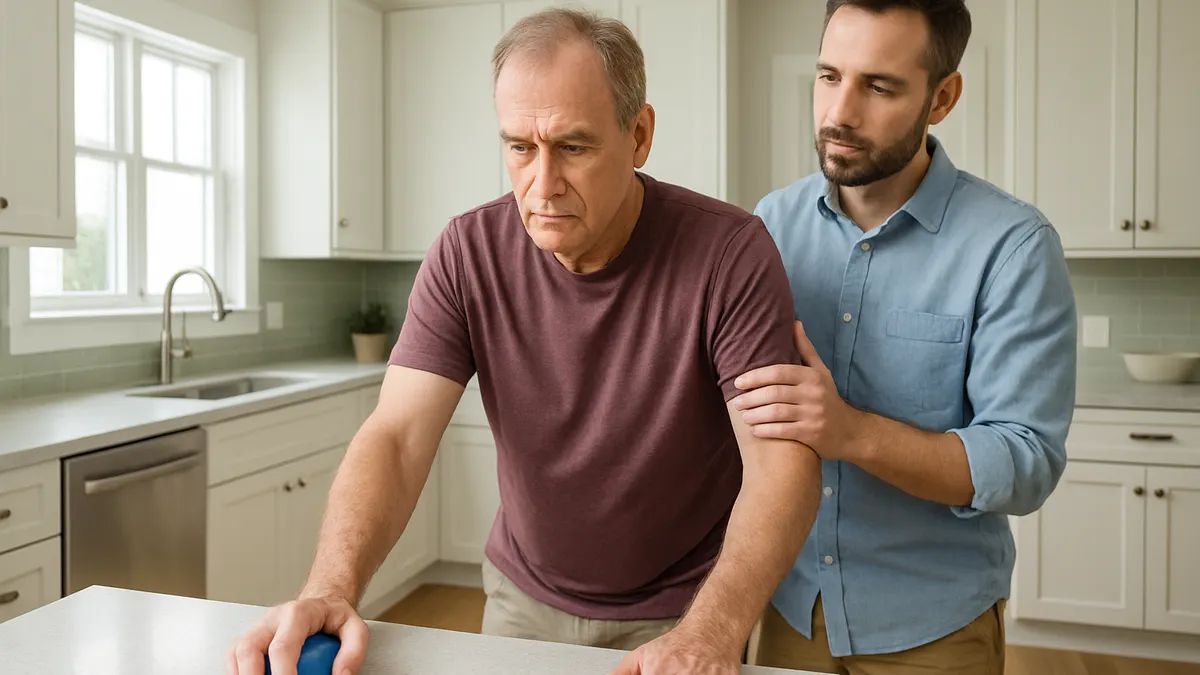
- Have a family member, caregiver or trusted helper present for the first several sessions of any new activity
- Stop immediately if the survivor reports chest pain, sudden dizziness, severe headache, or new weakness, and seek medical attention
Many survivors benefit from starting their home program alongside personalized outpatient rehabilitation sessions, where a licensed therapist can confirm which movements are appropriate for the current stage of recovery before they are practiced independently at home.
Arm and Hand Exercises
Weakness on one side of the body, known as hemiparesis, is a common effect of stroke. Rebuilding arm and hand function often takes the longest, but consistent practice produces real gains even months after the initial event.
- Shoulder flexion: Sitting upright, slowly raise the affected arm forward and up as far as comfortable, then lower it with control. Repeat 10 times.
- Table wipe: Place a cloth on a table and use the affected hand to slide it forward, backward, and side to side, encouraging shoulder and elbow movement.
- Finger extension: Place the hand flat on a table and practice spreading the fingers apart, holding for five seconds, then relaxing.
- Grip and release: Squeeze a soft stress ball or rolled washcloth, then fully release, repeating 10 to 15 times per session.
- Weight bearing: With the affected hand flat on a table, lean forward gently to place weight through the arm, which can help reduce stiffness and improve sensation.
Occupational therapists often pair these movements with real-world tasks, and adaptive occupational therapy techniques can be introduced at home to make activities like buttoning a shirt or holding utensils easier during the early stages of recovery.
Leg, Balance, and Walking Exercises
Restoring safe mobility is usually the top priority for survivors and families, since it directly affects independence and fall risk.
- Seated marching: While seated, lift one knee at a time as if marching, alternating legs for 10 to 15 repetitions per side.
- Sit-to-stand: From a sturdy chair, practice standing up and sitting back down slowly, using armrests only as needed. This builds the leg strength required for daily transfers.
- Heel raises: Holding onto a counter or stable surface, rise onto the toes and lower back down to strengthen the calves and improve balance.
- Standing weight shifts: While holding onto a support, shift body weight slowly from one leg to the other to rebuild trunk control and stability.
- Supported walking: Practice short walks with a cane, walker, or caregiver support, gradually increasing distance as confidence and strength improve.
Structured balance and coordination drills are especially valuable during this phase, since falls remain one of the leading setbacks during stroke recovery and often require months of careful, progressive practice to prevent.
A Simple Weekly Practice Schedule
| Day | Focus Area | Approximate Time |
| Monday | Arm and hand exercises | 20 minutes |
| Tuesday | Balance and standing drills | 20 minutes |
| Wednesday | Rest or light stretching | 10 minutes |
| Thursday | Leg strength and walking | 20 minutes |
| Friday | Arm and hand exercises | 20 minutes |
| Saturday | Balance and standing drills | 20 minutes |
| Sunday | Rest or light stretching | 10 minutes |
This schedule can be adjusted based on energy levels and therapist recommendations. Short, frequent sessions are generally more sustainable than long, infrequent ones.
Cognitive and Speech Practice at Home
Stroke can affect memory, attention, problem-solving, and communication in addition to physical movement. Simple daily activities support this side of recovery as well:
- Reading aloud for a few minutes each day to practice speech clarity and breath control
- Naming household objects out loud to reinforce word retrieval
- Using a calendar or whiteboard to practice sequencing daily tasks
- Playing simple matching or memory card games to support attention and recall
- Practicing following two-step instructions, such as “pick up the cup and place it on the counter”
Families who notice a survivor struggling with dressing, cooking, or handwriting beyond the first few weeks may want to look into occupational therapy support at home, since early intervention on these daily-living tasks tends to produce faster, more lasting independence.
Staying Consistent Without Burning Out
Recovery timelines vary widely, and motivation naturally dips during long stretches without visible progress. Building small rewards into the routine, tracking sessions on a calendar, and celebrating small wins — like holding a fork more steadily or walking a few extra steps — can keep the process manageable. Involving family members in sessions also reduces the emotional load on the survivor and helps everyone notice gradual improvement that might otherwise go unnoticed day to day.
Caregivers should also remember that staying consistent with a home exercise routine matters more than any single session’s intensity. A short, daily practice performed reliably tends to produce better long-term outcomes than sporadic, longer workouts.
When to Bring in Professional Support
Home exercises are most effective as a complement to, not a replacement for, professional therapy. Consider reaching out to a home health team if:
- Progress plateaus for several weeks despite consistent practice
- New symptoms appear, such as increased spasticity, pain, or swallowing difficulty
- The survivor becomes isolated or shows signs of frustration that affect participation
- Home safety concerns arise, such as difficulty navigating stairs or the bathroom
- A caregiver feels unsure whether an exercise is being performed correctly
Coordinated in-home nursing and therapy support can bridge the gap between hospital discharge and full independence, offering hands-on guidance, safety checks, and adjustments to the exercise plan as recovery progresses.
Recognizing the connection between mindset and physical healing also helps families understand why encouragement and patience are as important as the exercises themselves.
Stroke recovery is rarely a straight line, but a steady home routine built around safe, repeatable movement gives survivors the best chance at regaining independence. Families who want additional guidance on building a personalized recovery plan can rely on A Plus Care to combine skilled therapy with the kind of consistent, in-home support that keeps progress moving forward. Looking ahead, future articles on adaptive equipment for stroke survivors, caregiver burnout prevention strategies, and nutrition’s role in neurological recovery can offer even more depth for families navigating this journey.
A Plus Care provides in-home stroke rehabilitation support across Beverly Hills, Brentwood, Downtown, Hollywood, Palms, Sawtelle, West Hollywood, Westwood, Arlington Heights, and Beverly Grove.
Frequently Asked Questions
How soon after a stroke can exercises begin at home?
Many survivors can begin gentle, therapist-approved movement within days of leaving the hospital, though the exact timeline depends on stroke severity, overall health, and physician guidance.
What is the best exercise for stroke recovery at home?
There is no single best exercise; a combination of arm, hand, leg, and balance movements tailored to the survivor's current ability level produces the most well-rounded recovery.
How many times a week should stroke rehabilitation exercises be done?
Most therapists recommend daily practice in short sessions of 15 to 30 minutes, since frequent repetition supports the brain's ability to rebuild neural pathways.
Can stroke survivors fully recover using home exercises alone?
Home exercises support and extend the benefits of professional therapy, but they work best as part of a coordinated plan that includes regular evaluation by a licensed therapist.
What household items are useful for stroke rehabilitation exercises?
A sturdy chair, resistance bands, a soft ball, a rolled towel, and a stable countertop or railing are enough to perform most beginner and intermediate exercises safely.
Is it normal to see slow progress during stroke recovery?
Yes, recovery often happens in small, gradual steps, and plateaus are common. Adjusting the exercise plan or consulting a therapist can help restart progress when it stalls.
How can caregivers help without doing too much for the survivor?
Caregivers should offer physical support and encouragement while still allowing the survivor to attempt each movement independently first, stepping in only when safety requires it.
When should a stroke survivor stop exercising and call a doctor?
Exercise should stop immediately if the survivor experiences chest pain, sudden severe headache, new numbness, confusion, or a significant change in speech or vision, and emergency care should be sought right away.