
The execution of a total hip arthroplasty (THA) is an advanced surgical intervention that effectively eliminates severe arthritic pain and restores structural joint mechanics. However, once the orthopedic surgeon completes the implant fixation, the biological success of the procedure becomes entirely dependent on post-operative care and movement modification. The initial six to twelve weeks following a hip replacement represent a high-risk timeframe where the surrounding soft tissues, musculature, and joint capsule are profoundly compromised. Managing this sub-acute window requires strict adherence to specific movement guidelines (hip precautions) to prevent catastrophic dislocation of the new implant.
Introducing specialized medical care immediately upon discharge is essential for bridging the high-risk gap between hospital discharge and full recovery.
While a physical therapist focuses heavily on lower-extremity gait mechanics and building foundational leg strength, integrating targeted occupational therapy support following hip replacement surgery addresses how the patient interacts safely with their physical surroundings. By arranging for in-home health care for seniors recovering from hip surgery, families establish a controlled clinical environment that protects the fresh surgical site while systematically rebuilding the patient’s functional independence under direct physician supervision.
Clinical Biomechanics: Managing Hip Precautions and Preventing Dislocation
Following a total hip replacement, the structural integrity of the joint is vulnerable to mechanical failure if specific angles are exceeded. Depending on the surgical approach utilized by the physician (posterior versus anterior), the patient must follow strict precautions designed to protect healing muscles and ligaments from excess tension.
| Surgical Arthroplasty Approach | Critical Movement Restriction | Specific OT Biomechanical Strategy |
|---|---|---|
| Posterior Hip Approach | Avoid hip flexion past 90 degrees, internal rotation, and adduction (crossing legs) | Implementing long-handled adaptive tools; retraining safe pivot-transfer mechanics |
| Anterior Hip Approach | Avoid hyperextension, extreme external rotation, and crossing legs | Retraining step-to walking mechanics and enforcing extension limits |
Failing to follow these surgical guidelines can result in immediate joint subluxation or full dislocation, requiring emergency surgical revision.
Controlled therapeutic movement remains mandatory throughout structural regeneration.
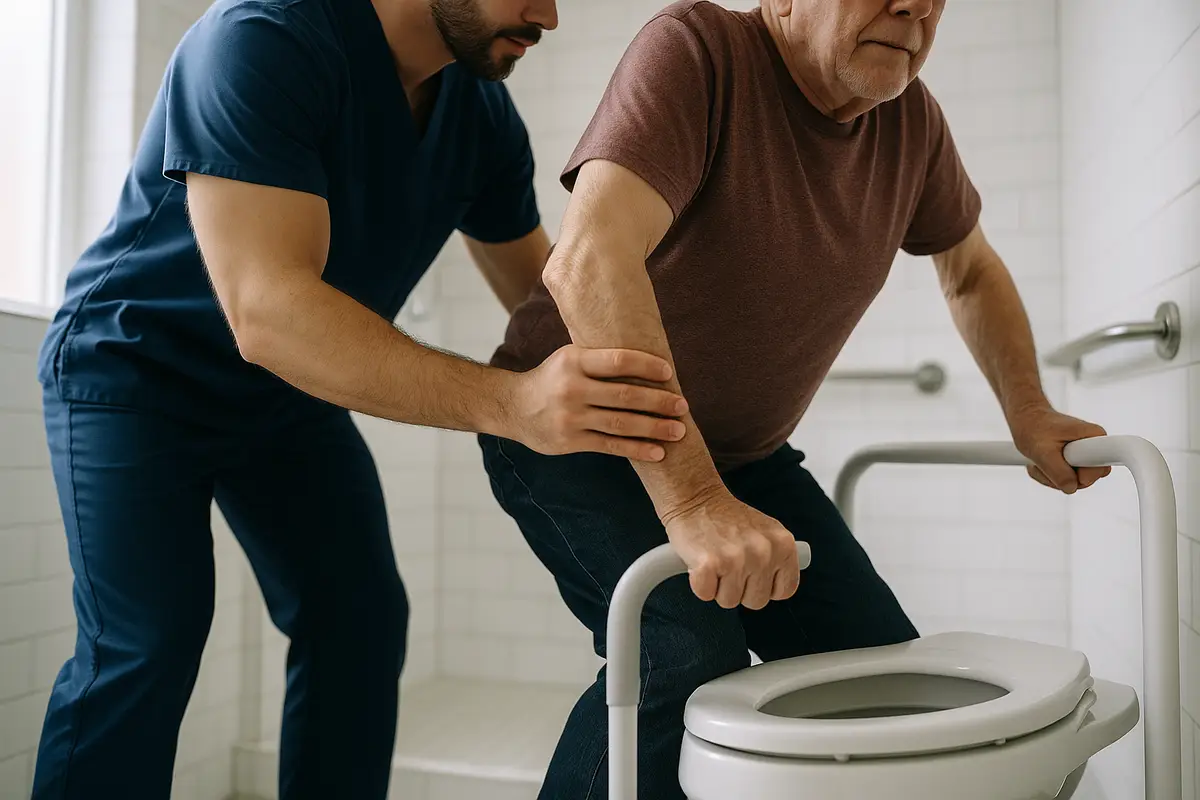
Occupational therapists do not perform tasks for the patient; instead, they act as clinical movement educators. They teach the patient how to navigate transitions—such as moving from a standing position to sitting on a chair—without ever allowing the hip joint to violate surgical limits. This intensive training prevents mechanical failure while allowing the patient to build essential muscle memory during the early stages of recovery why therapy is a critical component of post-surgical healing.
Environmental Safety Mapping: Implementing Advanced Fall Prevention
A senior returning home with a fresh hip implant faces immediate environmental hazards. Standard household features—such as deep couches, low toilet seats, and bathroom rugs—instantly transform into high-risk barriers that can cause a loss of balance or an accidental breach of surgical precautions.
| Household Environmental Hazard | Specific Biomechanical Threat to Hip | Targeted Clinical OT Modification |
|---|---|---|
| Standard Low Toilet Seat | Forces the hip into extreme flexion past 90 degrees, risking posterior dislocation | Installation of a raised toilet seat with stable, integrated arm grab bars |
| Deep, Soft Living Room Sofa | Causes the pelvis to sink down, trapping the hip joint in an unsafe acute angle | Modification of seating layouts; enforcing the use of high, firm armchairs |
| Standard Step-In Bathtub | Requires unilateral balance and excessive hip flexion to clear the high tub wall | Implementation of a tub transfer bench and slip-resistant safety surfaces |
Implementing these specialized fall prevention strategies for seniors recovering from hip surgery addresses environmental dangers before an injury occurs. These specific home modifications are key in-home recovery strategies applicable to joint replacement rehabilitation, turning the senior’s living space into a safe medical zone. By evaluating the home through a kinetic framework, therapists ensure that every pathway actively supports biological healing.
Interdisciplinary Synergies: Maximizing Musculoskeletal Recovery
Complete rehabilitation after a major orthopedic procedure cannot be accomplished through a single therapeutic discipline. Because a hip replacement alters the patient’s entire gait cycle, pelvic alignment, and core stability, patients benefit most from a unified, multi-tiered medical approach.
| Clinical Discipline | Core Anatomical Target | Collaborative Recovery Outcome |
|---|---|---|
| Physical Therapy (PT) | Gross motor strength, quadriceps/gluteal activation, and gait mechanics | Restoring safe walking patterns, stair navigation, and structural lower-body strength |
| Occupational Therapy (OT) | Fine motor control, transfer mechanics, and adaptive tool manipulation | Restoring safe task-sequencing and independent compliance with surgical limits |
Utilizing combined PT and OT treatment approaches for post-surgical adults ensures that all physical deficits are treated simultaneously. The physical therapist works to rebuild strength after hip replacement using targeted progressive loading exercises, while the occupational therapist applies that strength to real-world tasks using advanced outpatient physical therapy to rebuild strength after hip replacement.
This interdisciplinary collaboration maximizes the advantages of receiving therapy at home for elderly surgical patients. Patients can also continue their progress seamlessly by transitioning to targeted restoring mobility and function after joint replacement surgery, maintaining their recovery momentum without interruption.
Clinical Continuity: Bridging the Post-Acute Handoff Safely
The process of bridging hospital discharge and full recovery through home-based care requires a seamless clinical handoff to an outpatient team within 48 hours of discharge. Arriving home after major bone surgery causes intense muscle guarding and physical exhaustion, elevating the risk of accidental falls.
Arranging for specialized receiving occupational therapy at home during orthopedic recovery allows clinicians to align the patient’s daily movements with their specific environment immediately. Families benefit immensely from utilizing mobile therapy options that support surgical recovery at home, as this prevents the patient from losing physical stamina to stressful transportation.
A total hip replacement is a significant disruption to an older adult’s physical baseline, but it can be managed effectively with a highly structured clinical plan. By combining advanced biomechanical training from occupational therapists, targeted lower-extremity strengthening from physical therapists, and skilled nursing oversight for clinical wound care and medication tracking, home health care delivers a highly reliable medical framework. This comprehensive approach ensures that post-surgical patients can safely navigate their rehabilitation, protect their new joint implant, and confidently reclaim their long-term physical mobility within the safety and comfort of their homes.
Frequently Asked Questions
Why is occupational therapy important after a hip replacement?
Occupational therapy helps seniors safely perform daily activities after hip replacement surgery while following post-surgical precautions. Therapists teach techniques that reduce strain on the new joint and support a safe, independent recovery.
When should occupational therapy begin after hip replacement surgery?
Occupational therapy typically begins shortly after surgery, often within the first few days following hospital discharge. Early intervention helps patients adapt to movement restrictions and safely regain independence at home.
What daily activities can occupational therapy help with after a hip replacement?
Occupational therapists provide clinical training and strategies for activities such as transferring safely in/out of bed or chairs, navigating the home environment, and using adaptive tools (like sock aids or reachers) to maintain post-surgical precautions without compromising the joint.
Can occupational therapy help prevent falls during hip replacement recovery?
Yes. Occupational therapists assess fall risks, recommend home modifications, provide adaptive equipment, and teach safe movement techniques to reduce the risk of falls and protect the new hip joint.
What home modifications may be recommended after a hip replacement?
Common recommendations include raised toilet seats, grab bars, shower benches, firm seating, improved lighting, removal of tripping hazards, and rearranging furniture to create safer walking paths.
How does occupational therapy differ from physical therapy after a hip replacement?
Physical therapy focuses on rebuilding strength, improving balance, and restoring walking ability, while occupational therapy focuses on functional retraining, environmental adaptation, and cognitive coping strategies to ensure long-term clinical safety and independence at home.