
The success of a major surgical intervention, particularly an orthopedic procedure like a total joint replacement or spinal reconstruction, depends only partially on the precision of the surgeon’s blade. The remaining, and often most critical, variable in the recovery equation is the timing and execution of post-operative rehabilitation. For decades, historical medical models forced individuals to remain institutionalized or endure painful, exhausting transit to outpatient facilities. Modern clinical evidence, however, demonstrates that introducing home health care support during post-surgical recovery significantly reduces the risk of post-operative complications and accelerates the timeline for structural tissue healing.
Determining the exact chronological window to initiate physical rehabilitation requires balancing two biological priorities: protecting the integrity of the fresh surgical incision and preventing the debilitating effects of muscle atrophy and joint stiffness.
A clinical delay can result in permanent loss of motion.
Introducing specialized medical care immediately upon discharge bridges the gap between acute hospitalization and long-term musculoskeletal function. By implementing targeted strategies directly within the patient’s living environment, families can establish a secure, controlled clinical space that supports biological recovery without compromising the individual’s physiological stamina.
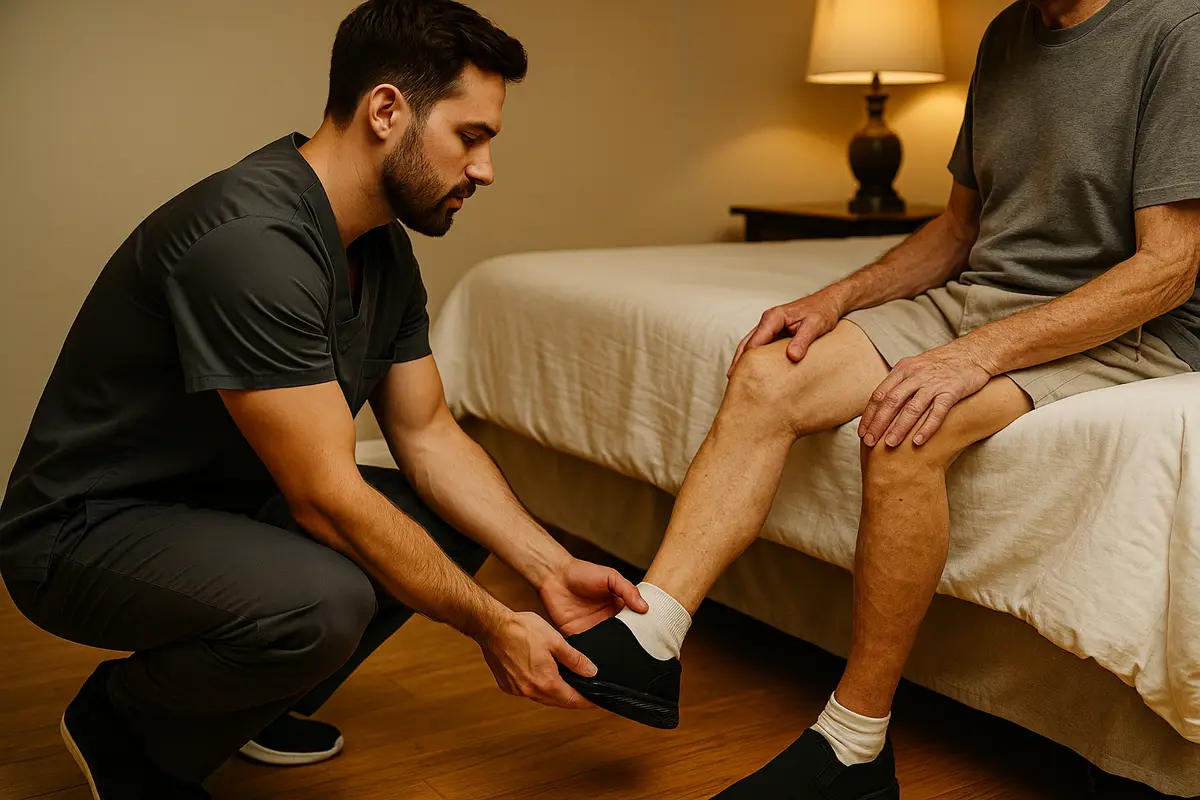
The Chronological Timeline: Defining the Early Mobilization Window
In modern orthopedic medicine, the phrase “early mobilization” has become a foundational standard of care. Clinical data confirms that for the vast majority of elective procedures, rehabilitation should ideally begin within 24 to 48 hours of returning home.
| Post-Operative Timeframe | Physiological Objective in Tissue | Immediate Therapeutic Action |
|---|---|---|
| Phase 1: Days 1–3 Post-Discharge | Prevention of deep vein thrombosis (DVT) and reducing localized edema | Ankle pumps, gentle muscle setting, and circulation exercises |
| Phase 2: Days 4–14 Post-Discharge | Prevention of arthrofibrosis (excessive scar tissue) and increasing active ROM | Controlled passive-assisted range of motion and initial gait mechanics |
Delaying movement under the assumption that a patient needs prolonged, static rest is a dangerous clinical misconception. Immobility alters the vascular system, reduces joint lubrication, and causes healthy muscle fibers to rapidly degrade. Initiating a plan for starting in-home physical therapy for a faster healing timeline ensures that the body receives the necessary mechanical signals to rebuild strong, flexible tissue matrixes around the surgical site from the earliest stages of healing.
Biological Safeguards: Why Immediate In-Home PT is Essential
The initial weeks following an operation represent a highly vulnerable period where the body is susceptible to irreversible structural changes. For instance, following an orthopedic intervention, the joint capsule naturally tightens as inflammatory fluids accumulate.
Understanding why physical therapy is essential in the post-surgery healing process requires looking at the cellular response to controlled movement.
When a licensed therapist guides a patient through specific, non-destructive exercises, it stimulates blood flow, delivering essential oxygen and nutrients to the healing tissues while accelerating the removal of metabolic waste. Furthermore, utilizing mobile physical therapy to accelerate at-home surgical recovery eliminates the physical stress of traveling to an appointment. Forcing a fresh post-surgical patient to navigate car transfers and waiting rooms causes unnecessary muscle guarding, spikes pain levels, and wastes the physical energy that should be reserved exclusively for targeted clinical exercises.
Special Focus: Knee and Joint Replacement Rehabilitation
The clinical demands of recovering from a total knee or hip replacement are exceptionally high. For these specific procedures, achieving early flexion and extension thresholds is mandatory to prevent the joint from locking up permanently due to internal scar formation.
| Joint Arthroplasty Type | Critical Clinical Vulnerability | Targeted Rehabilitation Metric |
|---|---|---|
| Total Knee Replacement (TKA) | Rapid loss of terminal extension and developing a flexion contracture | Achieving 0 degrees of extension and progressively reaching 90 degrees of flexion |
| Total Hip Replacement (THA) | Accidental dislocation due to violating surgical movement precautions | Training in safe transfer mechanics and enforcing strict hip angle limits |
Navigating these complex protocols requires professional guidance. Utilizing comprehensive in-home health care options for knee replacement rehabilitation provides patients with continuous access to advanced orthopedic monitoring. Licensed clinicians physically measure joint degrees using a goniometer and perform manual therapy to mobilize soft tissues. This precise approach is central to restoring mobility through therapy after joint replacement, ensuring patients safely meet their functional recovery targets without risking structural damage to the new implant.
Managing the Complex Post-Acute Handoff
The process of transitioning from hospital to home-based rehabilitation is a high-risk transition point where logistical confusion can result in rapid clinical regression. In a hospital, a patient’s movements are closely controlled by automated beds and handrails. At home, standard features like deep carpets or low chairs can immediately cause physical strain.
An uncoordinated discharge plan often leads to medication errors and a failure to protect surgical wounds.
Arranging for a professional assessment within 48 hours of discharge allows clinicians to align the home environment with the patient’s surgical precautions. Families need to understand what to expect from post-surgery home Health care during this initial intake. The clinical team reviews the surgeon’s discharge instructions, performs comprehensive medication reconciliation, checks vital signs to monitor cardiovascular stability, and establishes structural safeguards to ensure every movement promotes recovery.
Maximizing Long-Term Autonomy via Interdisciplinary Synergies
Complete post-surgical recovery involves more than simply restoring muscle strength; it requires rebuilding the precise coordination needed to interact safely with the home environment. While a physical therapist focuses heavily on lower-extremity biomechanics, complex cases often benefit from integrating multiple disciplines.
| Clinical Discipline | Core Musculoskeletal Focus | Interdisciplinary Outcome |
|---|---|---|
| Physical Therapy (PT) | Gross motor strength, gait retraining, and joint range of motion | Restoring safe walking mechanics, stair navigation, and functional balance |
| Occupational Therapy (OT) | Fine motor control, upper-extremity coordination, and environmental adaptation | Retraining task-sequencing, motor planning, and independent medication routines |
Utilizing a strategy of combining PT and OT for comprehensive surgical recovery at home ensures that all physical limitations are addressed together. The physical therapist builds the foundational balance and core strength, while the occupational therapist applies that stability to functional tasks using specialized occupational therapy to restore function following surgery.
This interdisciplinary collaboration maximizes the benefits of receiving physical therapy at home after an operation. Patients can also continue their progress seamlessly by transitioning to outpatient physical therapy after surgery in Brentwood as their mobility improves, ensuring they maintain therapeutic momentum.
Major surgery is a significant disruption to a senior’s physical baseline, but it can be managed effectively with a structured recovery plan. By combining early mobility exercises from physical therapists, adaptive strategies from occupational therapists, and skilled nursing oversight, home health care provides a highly effective medical framework. This specialized approach ensures that post-surgical patients can safely navigate their recovery, minimize the risk of re-injury, and confidently reclaim their physical independence within the comfort and safety of their homes.
Frequently Asked Questions
How soon can you start in-home physical therapy after surgery?
Most patients can begin in-home physical therapy within 24 to 48 hours after returning home from surgery, depending on their surgeon's recommendations, overall health, and the type of procedure performed.
Why is early physical therapy important after surgery?
Early physical therapy helps improve circulation, reduce swelling, prevent blood clots, maintain joint mobility, minimize muscle loss, and support a faster, safer recovery process.
Is in-home physical therapy effective after knee or hip replacement surgery?
Yes. In-home physical therapy is highly effective after joint replacement procedures because therapists can monitor recovery, improve range of motion, strengthen muscles, and help patients safely perform everyday activities in their home environment.
What happens during the first in-home physical therapy visit after surgery?
During the initial visit, the therapist reviews the surgeon's instructions, evaluates mobility and strength, assesses the home for safety concerns, establishes recovery goals, and develops a personalized rehabilitation plan.
Can in-home physical therapy help prevent post-surgical complications?
Yes. Regular therapy can help reduce the risk of complications such as joint stiffness, muscle weakness, falls, blood clots, decreased mobility, and delayed healing by encouraging safe movement and functional recovery.
How long will I need physical therapy after surgery?
The duration varies based on the type of surgery, overall health, and recovery goals. The duration is determined by your physician's prescribed plan of care and clinical progress. In-home physical therapy typically continues throughout the immediate post-surgical recovery period until the patient is safely able to transition to outpatient care.