
Living independently is something many older adults value and work hard to maintain. However, changes in mobility, balance, memory, and overall health can gradually make living alone more challenging. Recognizing these early warning signs allows families to provide the right support before a minor concern becomes a medical emergency. For family members, monitoring an aging parent or loved one who lives alone often means paying close attention to subtle changes in their health and daily routine. Recognizing the subtle, often unspoken indicators of health decline is essential for recognizing when an aging parent needs professional support before an emergency or catastrophic injury occurs.
When a senior begins to struggle, the solution is not necessarily to uproot them from their home or compromise their independence with unnecessary changes to their living situation. Instead, integrating advanced medical oversight directly into their living space can bridge the gap between independence and clinical safety. Identifying specific warning signs allows families to intervene early, utilizing targeted clinical home health services for seniors in Los Angeles to address underlying medical issues while preserving the patient’s lifestyle.
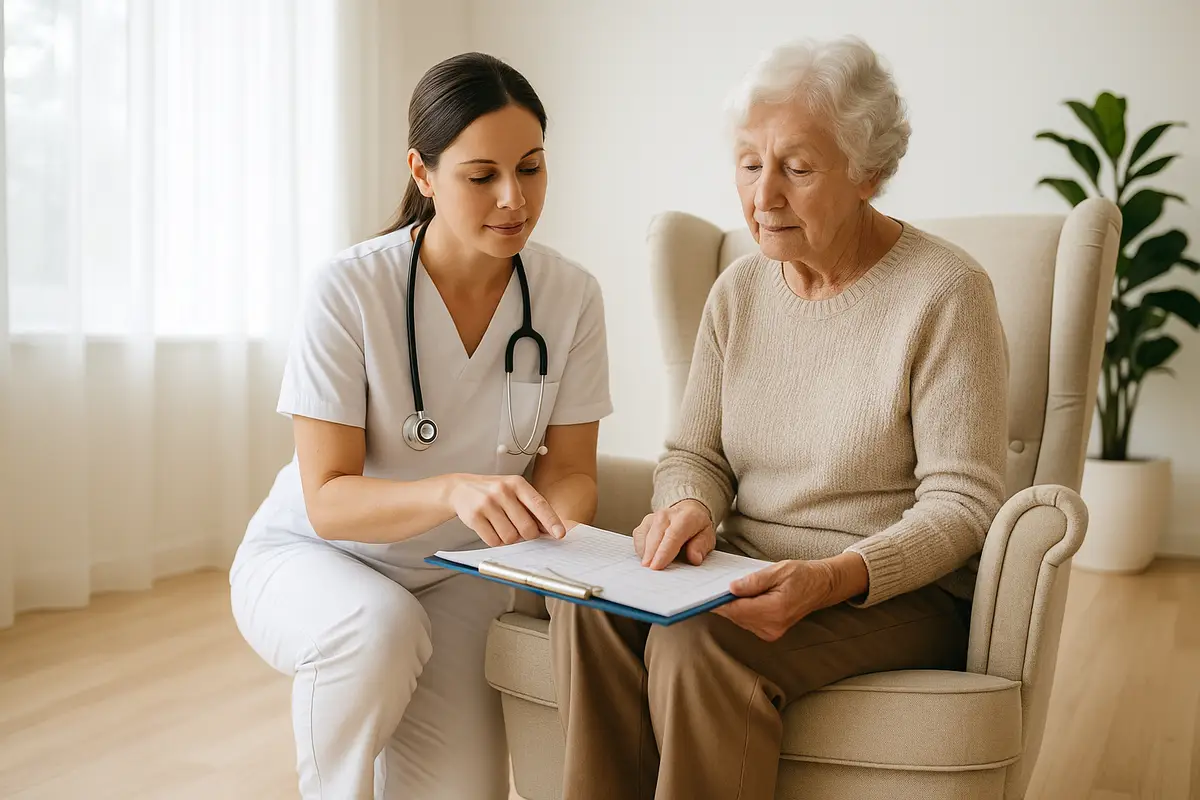
Physical Indicators: The Silent Decline of Mobility and Strength
One of the most immediate and objective warning signs of a declining health status involves noticeable changes in gait, posture, and physical stamina. Many older adults experience a gradual reduction in muscle mass, joint flexibility, and proprioception. Families should closely observe how their loved one navigates their environment. Difficulty rising from a deep armchair, relying heavily on walls or furniture for stability while walking (furniture walking), or a visibly slowed walking pace are critical indicators of increased risk of injury.
These noticeable changes in balance and strength decline as early warning signs point directly to an elevated risk of falls and mobility-related injuries. Ignoring these mobility deficits frequently leads to a total loss of autonomy. Introducing professional in-home physical and occupational therapy for aging adults at this stage allows licensed clinicians to implement evidence-based therapeutic exercises. These targeted interventions work to restore foundational core strength, retrain dynamic balance, and reverse muscle atrophy before a fall takes place.
Architectural Hazards: Elevating Environmental Fall Risks
A senior’s physical decline is often reflected in the safety of their home environment. As mobility decreases, everyday household features that were once easy to navigate can become safety hazards. Family members visiting an aging parent should take a careful look around the home to identify potential fall risks and other obstacles that could affect their loved one’s safety and independence.
to detect subtle signs that the living space is no longer compatible with the senior’s physical capabilities.
| Environmental Risk Factor | Clinical Consequence | Targeted Home Health Intervention |
|---|---|---|
| Neglected Home Maintenance | Accumulation of clutter in walking paths increases trip hazards | Clinical home safety screening and pathway modification |
| Unsteadiness in the Bathroom | High risk of slipping on wet tile or struggling with low toilet seats | Adaptive equipment recommendations (grab bars, raised seats) |
| Difficulty Navigating Stairs | Cardiovascular strain or severe joint pain during vertical transitions | Stairway biomechanics training and energy conservation layouts |
Unaddressed architectural barriers combined with physical frailty create immediate fall risks and home safety concerns in older adults. A fall can result in devastating injuries, such as hip fractures or traumatic brain injuries, which frequently trigger permanent institutionalization. Clinical home health teams mitigate these dangers by evaluating the home environment and teaching advanced compensatory strategies that transform a hazardous house into a safe medical recovery environment.
Medical Complexity: Managing Multiple Chronic Conditions
Living alone complicates the management of advanced medical diagnoses. As individuals age, they frequently experience several chronic health conditions that require ongoing management that require precise, coordinated oversight. Common health conditions that commonly affect seniors living alone include congestive heart failure (CHF), chronic obstructive pulmonary disease (COPD), advanced diabetes, and progressive neurological disorders.
| Medical Challenge | Clinical Operational Impact | Safe Home Health Solution |
|---|---|---|
| Medication Non-Compliance | Forgetting doses, mixing up pills, or duplicating highly potent medications | Clinical medication reconciliation and therapeutic routine design |
| Unmonitored Vital Signs | Undetected spikes in blood pressure or sudden drops in blood oxygen levels | Regular nursing diagnostics and physiological tracking |
| Wound Healing Deficits | Development of pressure ulcers or slow-healing diabetic foot wounds | Advanced wound care protocols and infection control |
Effectively managing multiple chronic conditions in elderly individuals requires clinical expertise far beyond what untrained family members can provide. When a senior exhibits frequent exacerbations of their illness, repeated emergency room visits, or an inability to follow complex medical instructions, professional home health care is necessary. Incorporating skilled nursing care provided in the comfort of home ensures that vital signs are accurately monitored, surgical or diabetic wounds are professionally treated, and medication protocols are strictly executed under a physician’s direct supervision.
Post-Hospitalization Vulnerability: Ensuring a Safe Transition
The period immediately following a discharge from an acute care hospital or inpatient rehabilitation facility is an one of the highest-risk periods for seniors living by themselves. The first 30 days post-discharge carry a statistically high rate of hospital readmission due to medication confusion, post-surgical pain management failures, and immediate physical exhaustion.
A senior returning to an empty house after a major medical event faces immense challenges. Successfully transitioning home safely after a hospital stay requires a seamless handoff to an outpatient clinical team. Without immediate home health oversight, a patient may fail to comprehend their new discharge instructions, skip essential follow-up medical appointments, or attempt physical movements that violate surgical precautions, causing serious re-injury.
Determining the Appropriate Scope of Clinical Home Health Care
Once the warning signs are identified, families must navigate the administrative and clinical process of determining which home health services are appropriate for their loved one’s specific diagnoses. It is vital to understand that clinical home health care is an entirely separate entity from non-medical custodial care. Clinical care must be prescribed by a physician and is focused on objective rehabilitation, medical recovery, and physiological stabilization.
[Physician Diagnosis] —> [Home Health Agency Evaluation] —> [Custom Clinical Plan of Care] —> [Regained Independence]
Integrating specialized occupational therapy support for seniors living independently allows patients to safely master their environment. Occupational therapists do not perform chores for the patient; instead, they clinically retrain the patient’s fine motor skills, introduce advanced cognitive strategies, and teach energy conservation techniques. This professional guidance delivers long-term home health solutions that help seniors stay independent, ensuring they can safely manage their own medication routines and navigate their living spaces without compromising their safety.
Recognizing the early warning signs of physical or medical decline in an older adult living alone is a crucial step in proactive care. By introducing a licensed clinical team of home health nurses and physical or occupational therapists, families in Brentwood, Westwood, Beverly Hills, Beverly Grove, and Arlington Heights can provide their loved ones with the precise medical support needed to thrive safely, comfortably, and independently in their own homes.
Early intervention can help seniors in Brentwood, Westwood, Beverly Hills, Beverly Grove, and Arlington Heights remain safer, healthier, and independent in the place they know best—their own home.